Undertone Test: What Is My Undertone?
What is my undertone? Eight quick questions, with an optional photo check, tell you if it's warm, cool, neutral or olive.
Private by design. Your photo is analyzed on your device and never uploaded, saved or shared.How this works
Answer 8 quick questions. Want a photo check too? Choose photo or Use camera above.
Your undertone is the subtle color beneath the surface of your skin: warm (golden, peachy or yellow), cool (pink, red or bluish), neutral (a balance of both) or olive (a green or gray-green cast). It stays the same whether you’re tanned or pale, and it’s the key to choosing foundation, jewelry and the colors you wear near your face.
Take the undertone test
This skin undertone test opens with a quiz: eight quick questions about your veins, jewelry, how you tan and which foundations have looked wrong on you. If you want a second opinion, pick Choose photo or Use camera, and we’ll read the color of your cheeks on your own device and add it as a smaller vote.
You’ll get your undertone, how confident the result is, and practical advice for foundation, jewelry, colors and hair. The skin hue angles that read as warm, cool, neutral and olive are listed in the numbers behind each result.
Skin tone vs undertone: what’s the difference?
- Skin tone (also called surface tone or depth) is how light or dark your skin is: fair, light, medium, tan, deep. It changes with sun exposure.
- Undertone is the color underneath. Two people with the same skin tone can have different undertones, which is why a foundation can be the right depth but still look pink, orange or gray.
Foundation matching needs both: the right depth for your skin tone and the right undertone family. A skin tone test on its own only tells you the depth, which is why this one asks about undertone too.
Warm vs cool vs neutral vs olive undertones
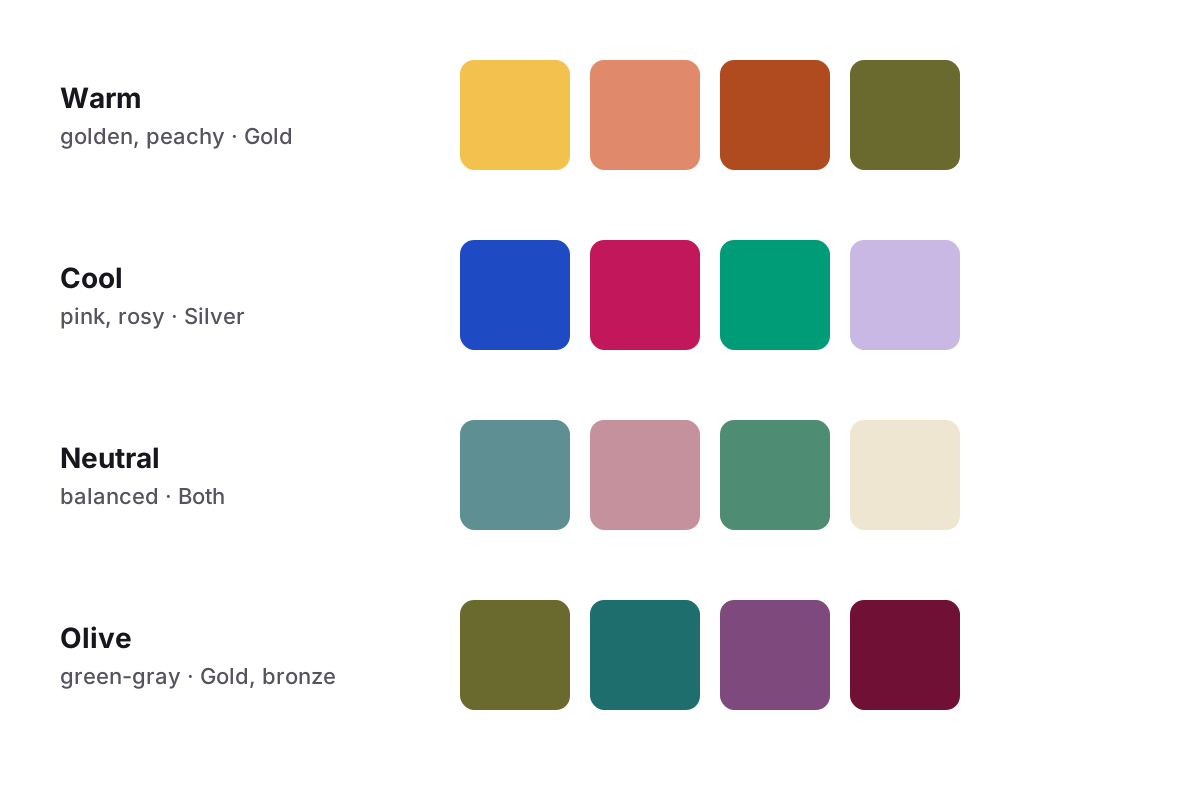
| Undertone | What you might notice | Jewelry | Foundation labels |
|---|---|---|---|
| Warm | Golden or peachy glow; tans easily; greenish veins | Gold, rose gold | W, Warm, Golden, Yellow |
| Cool | Pink or rosy tint; burns easily; bluish veins | Silver, platinum | C, Cool, Pink, Rosy |
| Neutral | No strong lean; both metals work | Gold and silver | N, Neutral |
| Olive | Greenish or gray cast in some light; most foundations look ashy | Gold, antique gold, bronze | O, Olive |
Most people start with the warm vs cool undertone question, but olive undertones are the most often misread. Olive skin can look warm in sunlight and cool in shade, and the typical sign is that foundations look either too pink or too yellow at the same time.
Five at-home undertone tests (and where each can mislead)
- The vein test. In daylight, look at the veins on your inner wrist. Blue or purple suggests cool; green suggests warm. Why it can mislead: veins look blue largely because of how skin scatters and absorbs light, and their apparent color also depends on how deep they sit and how thick your skin is (Kienle and colleagues). Treat it as one clue, not the answer.
- The jewelry test. Hold gold and silver against your face and hands. The metal that makes your skin look clearer and more even is usually the one that matches. Why it can mislead: personal taste and familiarity get in the way. Ask a friend.
- The white paper test. Hold a sheet of pure white paper next to your bare face in daylight. Against white, warm skin looks more yellow or golden, cool skin looks more pink, and olive skin can look slightly green or gray. Why it can mislead: indoor light shifts everything. Use a window.
- The sun test. Skin that tans easily and rarely burns often leans warm or olive; skin that burns easily and rarely tans often leans cool. Why it can mislead: how you tan depends on skin depth too, not only undertone.
- Foundation history. Think about foundations that looked wrong. Too pink suggests you’re warm or olive; too orange or yellow suggests you’re cool; everything looking gray or ashy suggests olive.
The quiz above combines these checks and weighs them, so one misleading clue doesn’t decide your result.
Finding your foundation shade
Your undertone narrows the options; your skin tone sets the depth. Used together, they work like a foundation shade finder:
- Choose the undertone family from your result (look for W, C, N or O, or words like golden, pink, neutral or olive on the label).
- Pick two or three depths that look close.
- Swatch them in stripes on your jaw, not your hand or wrist, so you can compare with your face and neck.
- Check in daylight after a few minutes, once the formula has settled. The right shade disappears into your skin; the wrong ones leave a visible line.
Your depth may change between summer and winter, but your undertone family stays the same.
Hair color for your skin tone
- Warm: golden, honey, copper, caramel and warm brown shades.
- Cool: ash, platinum, cool brown and blue-black shades.
- Neutral: most shades work; beige blondes and soft browns are easy wins.
- Olive: rich brown, chocolate and soft black; very ashy blondes can look gray against olive skin.
Makeup and contour for your undertone
For contour, choose a shade two or so steps deeper than your skin that shares your undertone: a gray-brown for cool skin, a soft bronze for warm skin, a neutral taupe for neutral skin, and a muted olive-brown for olive skin. For blush, cool undertones suit rose and berry, warm undertones suit peach and coral, and neutral and olive undertones suit soft terracotta and dusty rose.
Undertone picks the shades; your features decide where they go. Your eye shape guides liner and shadow placement, and the lip shape detector shows where lip liner looks most natural.
Next step: your full color season
Your undertone is one of three things that decide your color season. The other two are how light or deep your coloring is and how bright or soft it is. The color analysis adds those and gives you a full 24-color palette.
Frequently asked questions
How can I tell if I have warm or cool undertones?
In daylight, compare gold and silver jewelry against your skin, and pure white against cream. If gold and cream look better, you're likely warm; if silver and pure white look better, you're likely cool. If both work equally, you're probably neutral. The test above combines eight of these checks.
How do I identify my skin's undertone?
Use several at-home checks together rather than one: vein color, jewelry, white versus cream, how you tan, and which foundations have looked wrong on you. Each one alone can mislead, but together they give a clear answer.
Can AI determine my undertone?
A photo can help, but it can't decide on its own, because lighting and camera white balance change how skin looks more than undertone does. That's why this test treats the photo as a smaller vote next to your quiz answers, and lets you correct the lighting with white paper.
What does a neutral undertone mean?
A neutral undertone means your skin has no strong pink or golden lean. Neutral undertones usually suit both gold and silver jewelry and a wide range of colors, and neutral-labeled foundations tend to match best.
Can your undertone change?
Your undertone stays essentially the same through life. Your surface skin tone changes with tanning, redness, sun exposure and season, which is why the same person can need a different foundation depth in summer and winter while keeping the same undertone.
What is the prettiest skin tone?
There isn't one. Every skin tone and undertone can look radiant; the goal of an undertone test is simply to find foundation, jewelry and colors that match you.
Sources
- Why do veins appear blue? A new look at an old question (Applied Optics, 1996), Optica Publishing Group
- ISO/CIE 11664-4:2019 Colorimetry, Part 4: CIE 1976 L*a*b* colour space, International Organization for Standardization and CIE