Aquiline Nose (Hooked Nose): What It Is and How to Tell
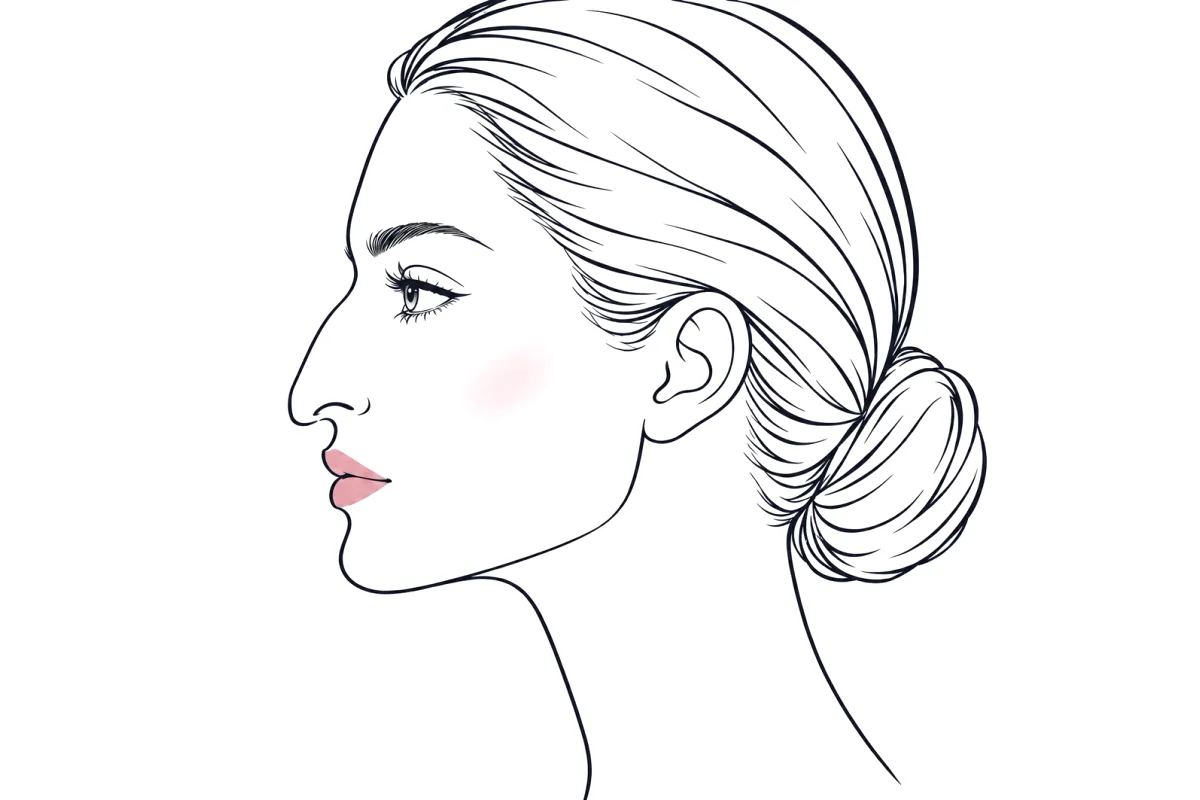
Why we say “aquiline”
“Hooked nose” is the phrase most people search for, but it has often been used unkindly. “Aquiline” is the neutral, descriptive term, from the Latin aquilinus, meaning “like an eagle”, after the curved shape of an eagle’s beak. On this page we use aquiline, and we describe the shape only. Nose types say nothing about anyone’s background.
How to tell if you have an aquiline nose
Pick your side profile in the nose shape detector, and a front photo adds your nose width and tip measurements.
Open the nose shape detector- Look at your profile. Take a side photo at eye level from about 1.5 m (5 feet), or use two mirrors.
- Trace the bridge. An aquiline bridge curves clearly outward along its length, more than a gentle arc.
- Check the tip. It often points slightly down, so the underside of the nose angles downward.
- Look at the high point. The curve usually peaks around the middle of the bridge.
- Now look from the front. An aquiline nose often looks straight and narrow at the bridge from the front, even though the profile is curved.
If your curve is gentle and your tip points forward, you’re more likely Roman. If the bridge is straight, see Greek.
What does it mean if you have a hooked (aquiline) nose?
Having a hooked (aquiline) nose means your nose has a clearly curved bridge in profile, often with a tip that points slightly down. It describes shape only. It has no link to ancestry, character or health. Many noses sit between aquiline and Roman, with a curve that’s more than gentle but not strongly arched.
What shapes an aquiline nose
The bridge is built from the nasal bones at the top and cartilage below them (StatPearls). An aquiline curve usually reflects a higher, more projecting bridge where bone and cartilage meet, and the tip can sit slightly lower depending on how the tip cartilages are shaped and supported. The result is a strong, clearly curved profile.
Aquiline vs Roman vs Greek
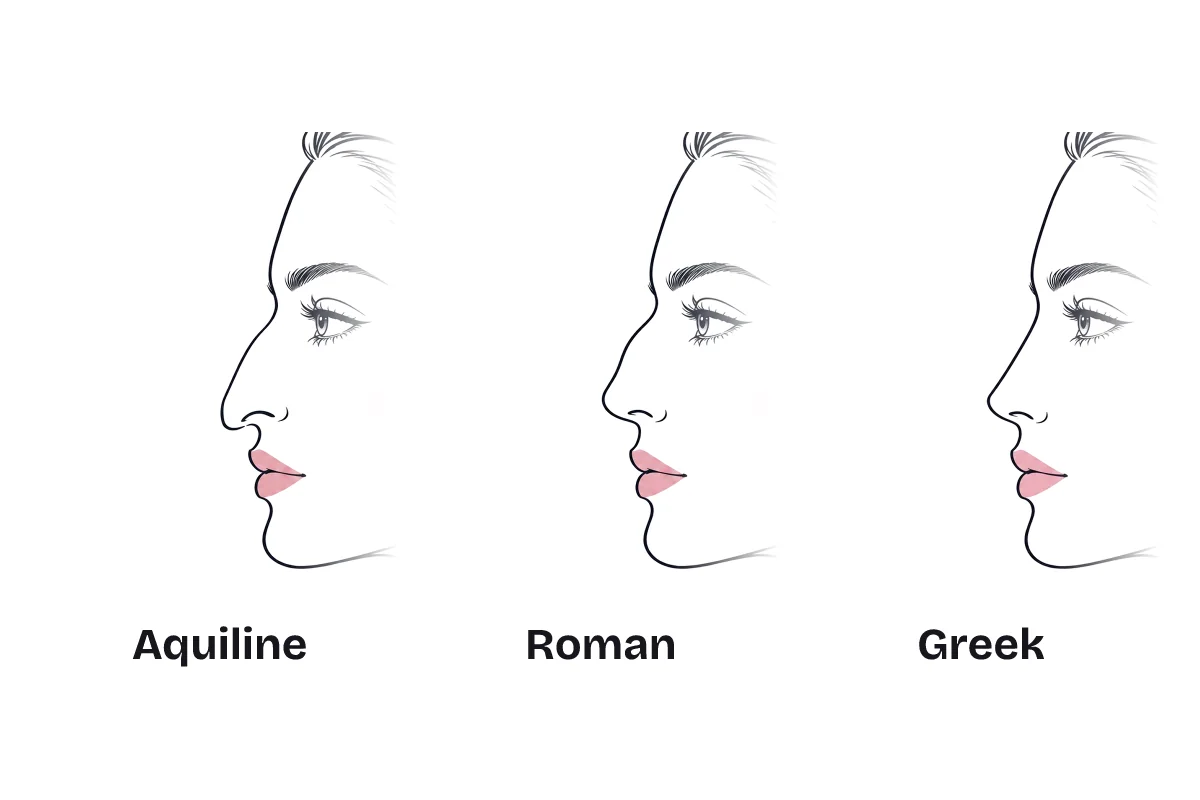
| Feature | Aquiline | Roman | Greek |
|---|---|---|---|
| Bridge curve | Pronounced | Gentle | None (straight) |
| Tip | Often slightly down | Forward | Forward |
| Seen from the front | Usually straight, narrow bridge | Usually straight | Straight |
All seven profiles, plus width and tip direction, are compared in the nose shapes guide, and the Roman nose guide covers the gentler version of this curve.
Glasses for an aquiline nose
- Adjustable nose pads let an optician set the frame at the right height on a curved bridge, so it doesn’t tip forward or sit on your cheeks.
- Frames with a slightly higher bridge rest on the upper, flatter part of the bridge.
- Medium or bold frames with a stronger top rim draw attention up to the eyes, if you’d like balance.
- Try frames on in profile: check a side view in the mirror to see how the frame line meets the bridge.
Optional styling ideas
None of these are necessary. They’re ways to choose where attention goes, if you want to.
Makeup
- In photos, a matte finish on the bridge reduces shine on the curve.
- A touch of blush or bronzer just under the tip can make it look slightly lifted.
- Soft highlight above and below the curve, but not on it, evens out the line.
- Defined eyes and brows draw attention upward.
Hair and profile
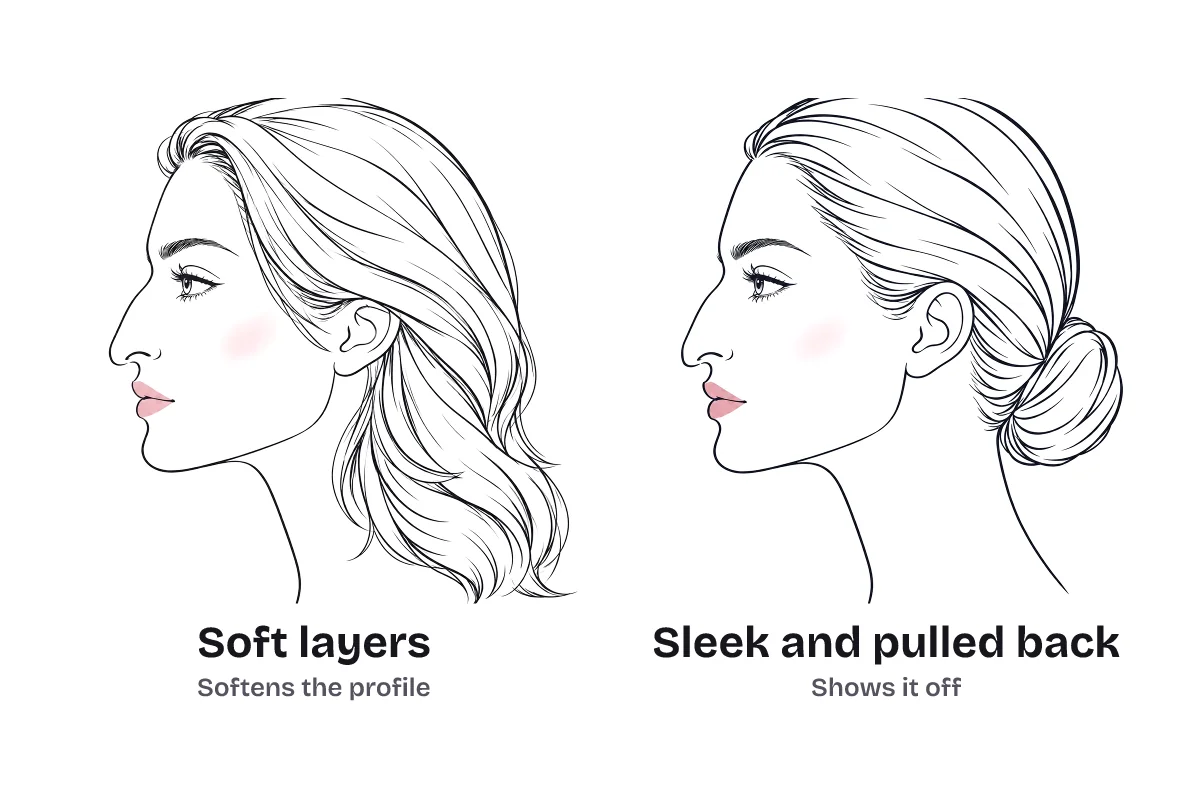
- Volume at the crown and back of the head balances a strong nose in side view.
- Side parts and soft face-framing layers soften the profile; sleek, pulled-back styles show it off.
- A fuller chin area, with beards for men or chin-length cuts for women, balances the profile from the side.
Nose piercings and an aquiline nose
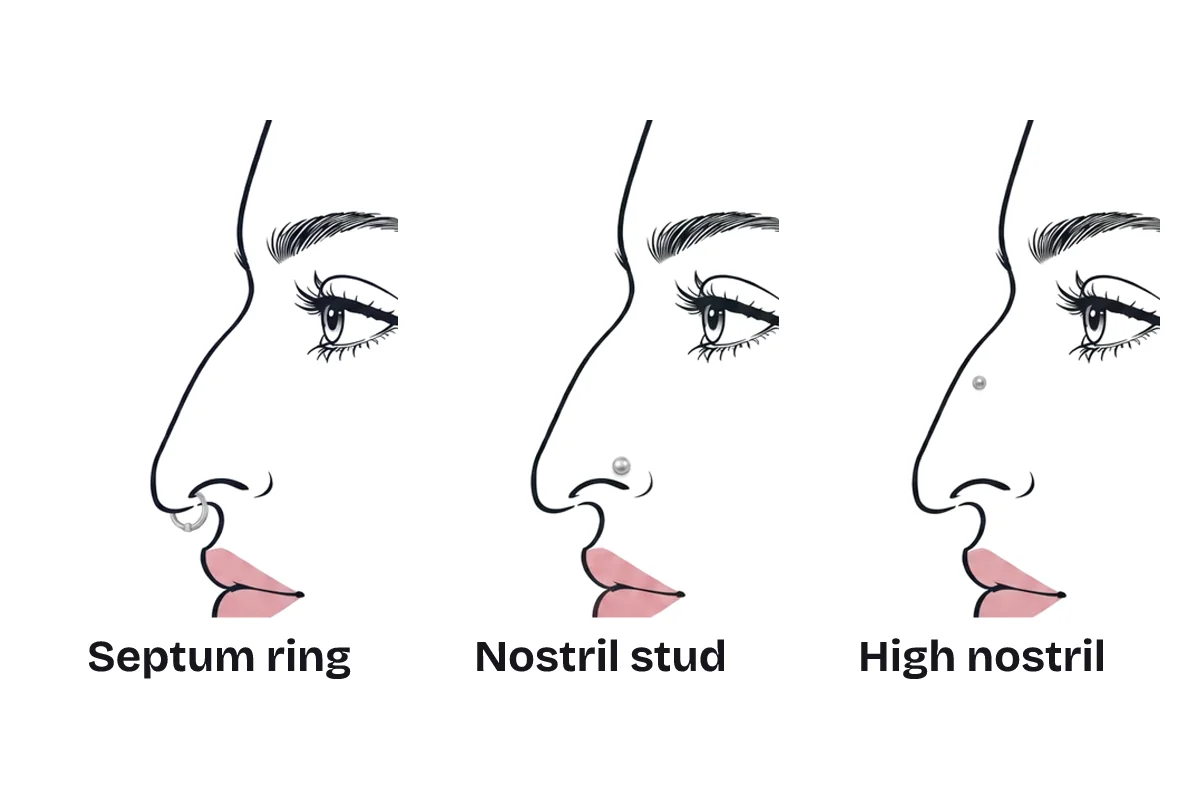
- Septum rings sit below the curve and draw the eye to the lower center of the face.
- Nostril studs at the nostril crease are subtle and suit every profile.
- High nostril placements add emphasis near the bridge for a bolder look.
- Small, delicate jewelry keeps the focus balanced; larger hoops at the nostril frame the tip.
A licensed, experienced piercer will check the best placement for your nostril shape.
An aquiline nose in men’s styling
A strong profile suits defined features around it: a trimmed beard with fullness at the chin, a clear jawline and some volume at the crown all balance a curved bridge in side view. Very short hair with a clean-shaven chin makes the nose the main feature of the profile, which is a striking look too.
Aquiline noses in photos
The nose is the feature closest to the camera in a selfie, so close-ups exaggerate it. Hold the phone further away, use a longer lens setting if your phone has one, and try a three-quarter angle rather than a strict profile. Soft front light reduces the shadow under a downward-pointing tip.
Does an aquiline nose change with age?
With age, the supports of the nasal tip tend to weaken, so the tip may droop slightly and the curve of the bridge may look more noticeable (Current Otorhinolaryngology Reports). This happens to most noses and is a normal part of aging.
Myths about aquiline noses
- “An aquiline nose tells you about someone’s background.” It doesn’t. Aquiline noses are found all over the world, and we never link nose shapes to ethnicity or nationality.
- “Exercises can straighten a curved bridge.” They can’t. Bone and cartilage don’t change with exercise.
- “A curved nose affects breathing.” Outer shape and breathing are usually unrelated.
- “Aquiline is less attractive.” No nose type is more attractive than another.
Identify your nose profile, and measure your nose width from a photo, with the nose shape detector.
Frequently asked questions
Is an aquiline nose rare?
No. Curved bridges are common all over the world. There's no reliable data ranking nose types by how common they are.
What does a hooked nose look like from the front?
From the front, an aquiline nose usually looks straight and fairly narrow at the bridge. The curve is mostly visible in profile, which is why people are often surprised by their nose in side-view photos.
Can you change a hooked nose naturally?
No. The curve comes from bone and cartilage, which exercises, massage and creams can't reshape. Makeup can soften how it looks in photos, and rhinoplasty is a surgical option some people choose. A consultation with a board-certified facial plastic surgeon is the place to discuss surgery.
What's the difference between an aquiline and a Roman nose?
A Roman nose has a gentle outward curve and a forward-pointing tip; an aquiline nose has a more pronounced curve and often a slightly downward tip. They sit on the same scale, and many noses fall between them.
Is an aquiline nose attractive?
No nose type is more attractive than another. Aquiline noses are common among people widely admired for their looks, and a strong profile is often described as striking. Beauty is personal.
Ready to check yours? The free nose shape detector takes about a minute, and your photo never leaves your device.
Open the nose shape detectorSources
- Anatomy, Head and Neck, Nose (StatPearls), NCBI Bookshelf, US National Library of Medicine
- The Ageing Nose: Challenges and Solutions (Current Otorhinolaryngology Reports, 2022), Springer Nature