Roman Nose: What It Is and How to Tell If You Have One
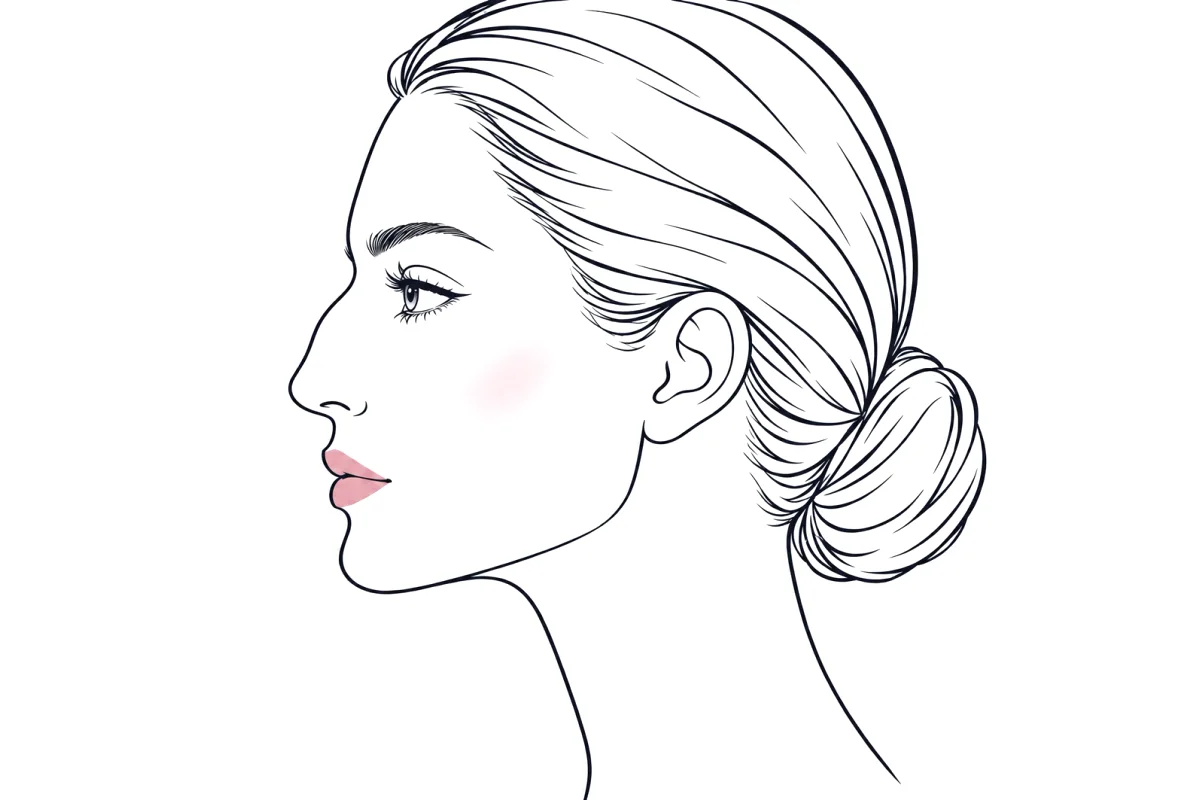
How to tell if you have a Roman nose
The nose shape detector measures your nose from the front and lets you pick your side profile from drawings.
Open the nose shape detectorThe side view tells you most. Ask someone to take a photo of your profile at eye level from about 1.5 m (5 feet), or use two mirrors, then check:
- The bridge curves gently outward between the point between your brows and the tip, like a soft arc.
- The bridge is prominent, standing out clearly from the face, often a little higher near the top.
- The tip points forward, not noticeably up or down.
- The curve is smooth, without a sharp peak.
- From the front, the nose often looks straight and fairly narrow at the bridge.
If your bridge is straight, you’re more likely Greek. If the curve is pronounced and the tip dips down, compare with aquiline.
What does it mean if you have a Roman nose?
The Roman label means your nose has a prominent bridge with a gentle outward curve in profile, and a tip that points forward. It’s a description of shape only; it says nothing about ancestry, personality or health. Many noses pair this bridge with features of other types, such as a fuller tip or a slightly downturned one.
What shapes a Roman nose
The upper part of the bridge is made of the paired nasal bones, and the lower part of cartilage, which continues down to the flexible tip (StatPearls). A gentle outward curve usually sits around the point where bone meets cartilage. How prominent it is depends on the size and angle of the nasal bones, the cartilage shape and the thickness of the skin over it. It’s simply part of your facial structure, like the shape of your jaw or cheekbones.
Roman vs aquiline vs Greek
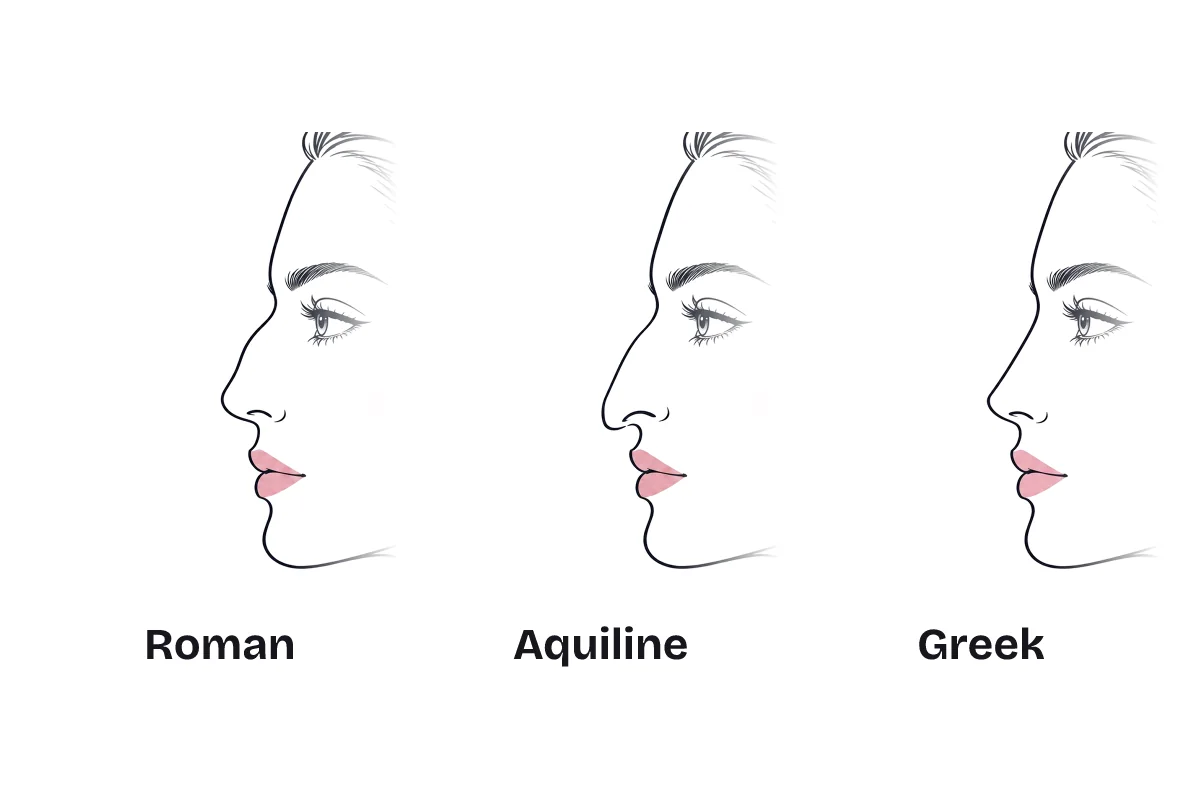
| Feature | Roman | Aquiline | Greek |
|---|---|---|---|
| Bridge in profile | Gentle outward curve | Pronounced outward curve | Straight |
| Tip direction | Forward | Often slightly down | Forward |
| Overall look | Strong, prominent | Sharply curved | Clean, straight line |
The three sit on a scale: straight (Greek), gently curved (Roman), strongly curved (aquiline). See the aquiline nose and Greek nose guides.
The nose shapes guide explains how the radix, the dip between the brows, changes whether a bridge reads as Roman or Greek.
Where the name comes from
“Roman nose” refers to the prominent, gently arched noses seen on many ancient Roman portrait busts and coins. It’s an art-history label for a profile, like “Greek nose” for the straight noses of classical Greek statues. It doesn’t describe where anyone’s family comes from: like every nose type, this profile is found in people all over the world.
Glasses for a Roman nose
The bridge is where glasses sit, so it’s the most practical thing to know about your nose.
- Look for a slightly higher bridge fit, or frames with adjustable nose pads, so the frame rests evenly on a prominent bridge without tilting.
- Keyhole and saddle bridges spread the weight well on a curved bridge.
- Choose frames with some presence, such as medium-thick acetate or browline frames, if you like balance with a strong profile. Very thin, small frames make the nose the focal point.
- Check the pad position: your eyes should sit near the center of each lens, and the frame shouldn’t rest on your cheeks.
Noses with a low, scooped bridge have the opposite fit problem; the button nose guide covers that.
Optional makeup for a Roman nose
Nose makeup is entirely optional, and most people skip it. If you enjoy it:
- To soften the curve in photos, use a matte highlight just above and just below the highest point of the curve, not on it. The curve itself then catches less light.
- To define it, a soft highlight straight down the bridge shows off the profile.
- Blend contour lightly along the sides of the bridge if you want it to look narrower from the front. A light hand looks more natural than a strong line.
Hair, brows and a strong profile
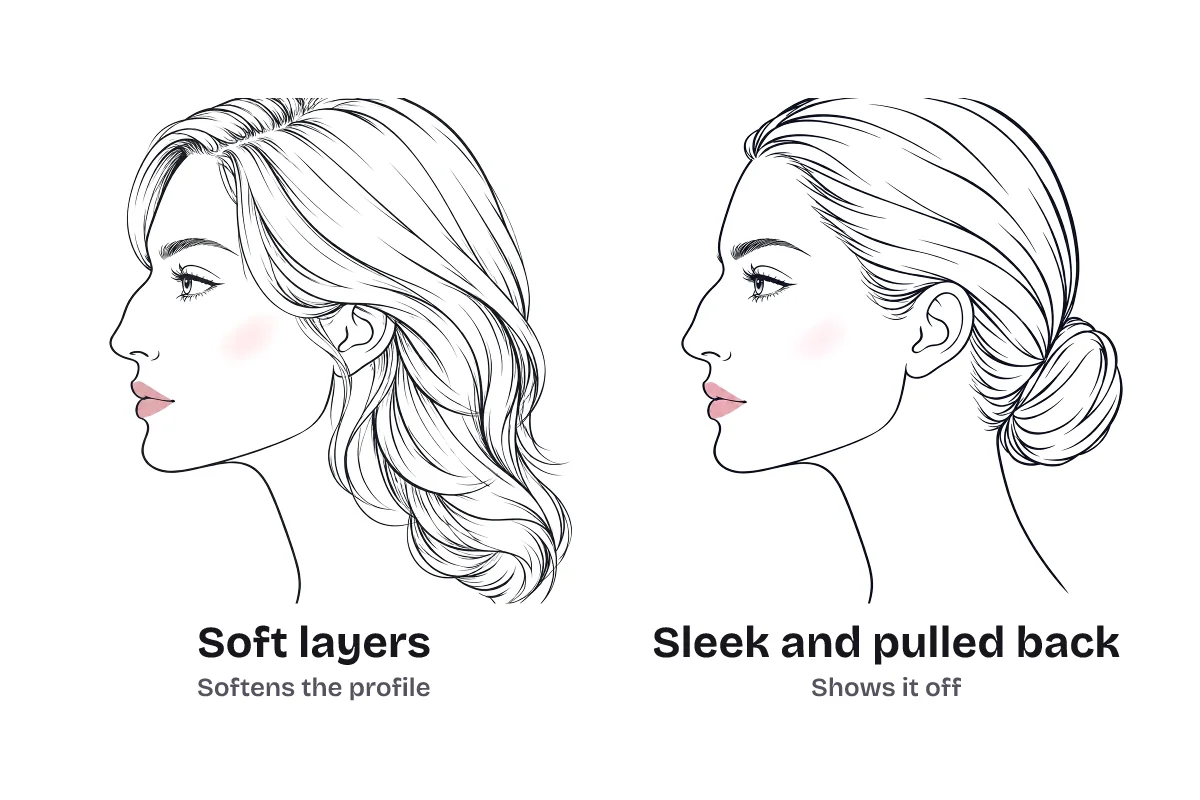
A prominent nose is part of your profile, and profile balance comes from the whole head:
- Volume at the back of the crown and a fuller chin area both balance a strong nose in side view.
- Defined brows draw attention up to the eyes.
- Side parts and face-framing layers soften the profile; slicked-back styles show it off.
Nose piercings and a Roman nose
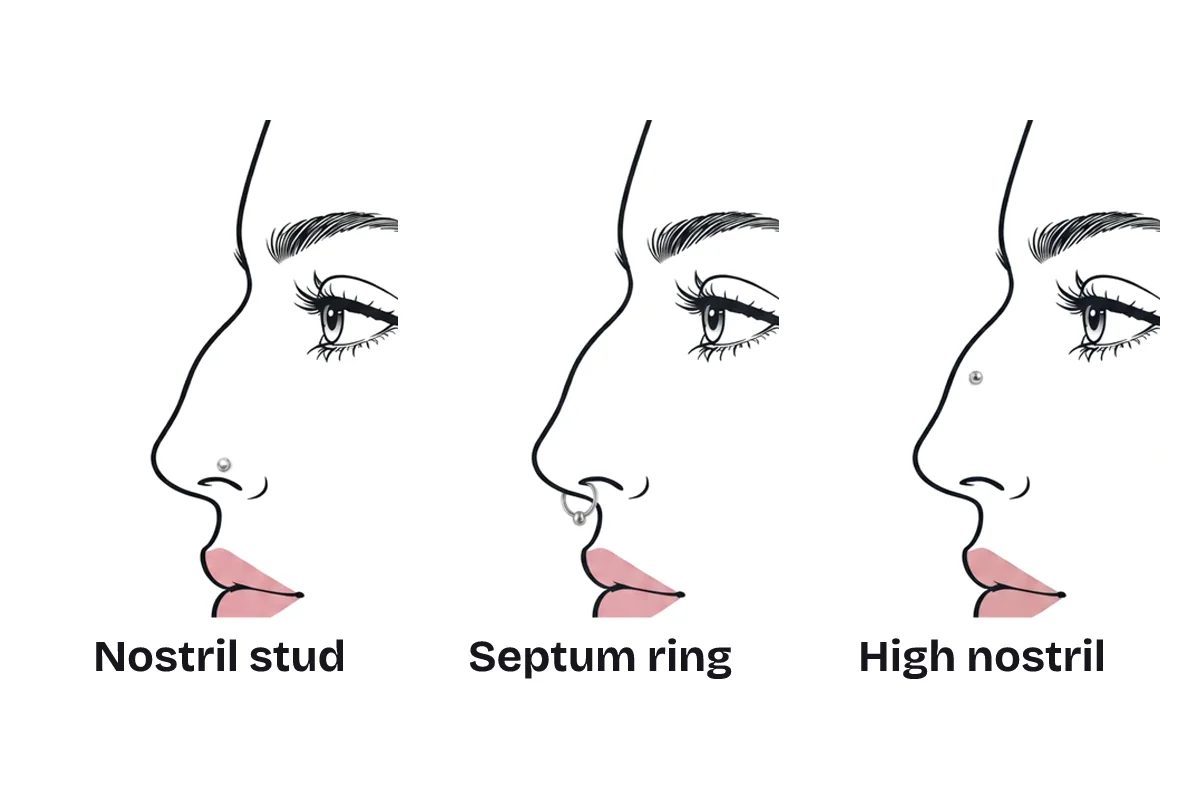
- Nostril studs placed at the natural crease of the nostril sit neatly and don’t compete with the bridge.
- Septum rings draw attention to the center and lower part of the nose, balancing a prominent bridge.
- High nostril piercings sit closer to the curve of the bridge and add emphasis there, which suits a bold look.
- Bridge piercings (between the eyes) are less common on high, prominent bridges; a piercer can tell you whether your anatomy suits one.
Whatever you choose, go to a licensed, reputable piercer, who will check placement against your nose shape.
A Roman nose in men’s styling
In men, a strong, curved bridge pairs naturally with defined brows and a well-shaped beard. A beard with some fullness at the chin balances the profile in side view, and a medium-length top with a little volume at the back of the head keeps the nose from dominating the silhouette.
A curved bridge in photos
Close-up selfies exaggerate whatever is nearest the lens, and the nose is closest. One study found that a selfie from about 30 cm (12 inches) makes the nose base look around 30% wider than a photo from 1.5 m (5 feet) (Ward and colleagues). For photos, hold the camera further away, zoom in slightly, and try a three-quarter angle, which shows a curved bridge as part of the whole face rather than in strict profile.
Does a Roman nose change with age?
A little, like every nose. Over the decades the tissues that support the tip tend to soften, so the tip can droop slightly and the curve of the bridge can look more pronounced (Current Otorhinolaryngology Reports). It’s a normal change.
Myths about Roman noses
- “A Roman nose means Roman ancestry.” The name comes from art, not genetics. The profile is found in people of every background.
- “A curved bridge needs correcting.” It’s a common, natural profile.
- “Roman noses are only masculine.” They’re common in people of every gender.
- “You need contour to balance a Roman nose.” Contour is optional. Many people love their profile as it is.
Find your nose type, and how wide it is from the front, with the nose shape detector.
Frequently asked questions
Is having a Roman nose rare?
No. A gently curved bridge is one of the most common nose profiles, and it's found in people of every background. There's no reliable data ranking how common each nose type is.
What's the difference between a Roman nose and an aquiline nose?
Roman and aquiline noses are close relatives. A Roman nose has a gentle outward curve and a tip that points forward. An aquiline nose has a more pronounced curve, and its tip often points slightly down. Many noses sit between the two.
What is the rarest nose type?
There's no reliable population data that ranks nose types by rarity. Nose shapes vary continuously, and the named types are convenient labels rather than strict categories.
Can men and women both have Roman noses?
Yes. This profile appears on people of every gender. It's sometimes described as strong or distinguished, but those are styling impressions rather than traits.
Is a Roman nose attractive?
No nose type is more attractive than another. Curved bridges are common among people widely considered attractive, and a strong profile is often admired. Beauty is personal.
Ready to check yours? The free nose shape detector takes about a minute, and your photo never leaves your device.
Open the nose shape detectorSources
- Anatomy, Head and Neck, Nose (StatPearls), NCBI Bookshelf, US National Library of Medicine
- Nasal Distortion in Short-Distance Photographs: The Selfie Effect (JAMA Facial Plastic Surgery, 2018), PubMed, US National Library of Medicine
- The Ageing Nose: Challenges and Solutions (Current Otorhinolaryngology Reports, 2022), Springer Nature