Greek Nose: What It Is and How to Tell If Yours Is Straight
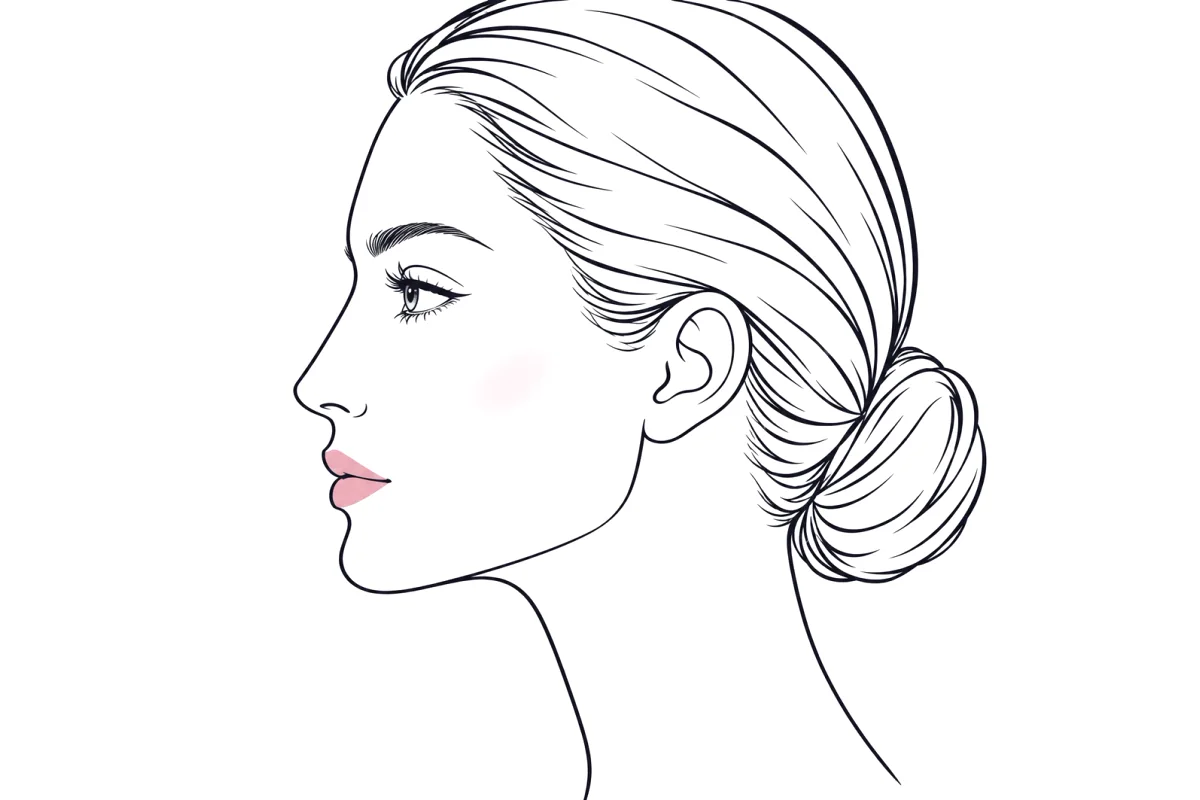
How to tell if you have a Greek nose
Choose your profile in the nose shape detector; a front photo adds your nose width and tip measurements.
Open the nose shape detector- Take a side view: a profile photo at eye level from about 1.5 m (5 feet), or two mirrors at an angle.
- Check the bridge line. From between your brows to the tip, it’s straight: no bulge outward and no dip inward.
- Check the tip. It points forward, neither clearly up nor down.
- Check the start of the bridge. On many Greek noses the dip between the brows (the nasion) is shallow, so the bridge flows smoothly from the forehead.
- Look from the front. The bridge usually looks even in width from top to tip.
A tiny curve is normal. If the bridge clearly arcs outward, see Roman; if it’s short and the tip turns up, see button; if the arch is strong and the tip angles down, see aquiline.
What makes a nose straight
The bridge is formed by the nasal bones at the top and the cartilage below them, which continues into the tip (StatPearls). When bone and cartilage meet in a smooth, even line and the tip cartilages sit in line with the bridge, the profile looks straight. Small differences in any of these produce the gentle curves or dips seen in other nose types.
Greek vs Roman vs button
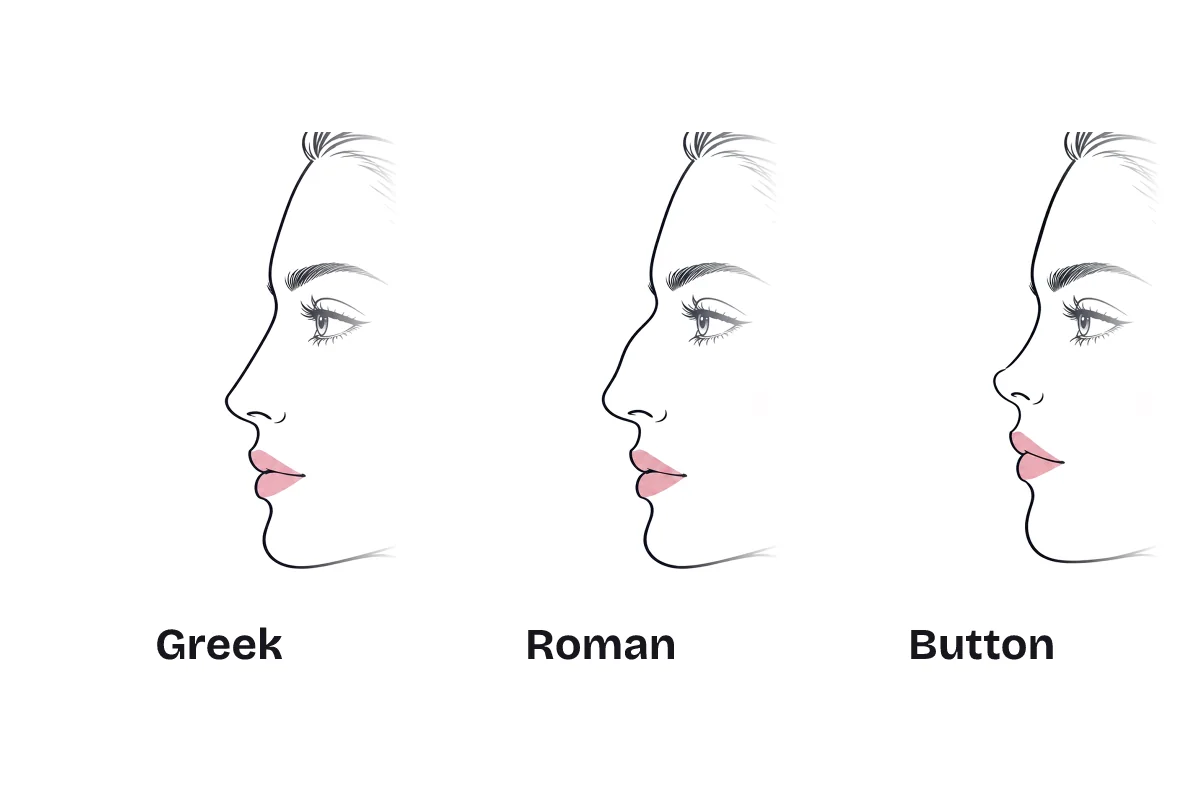
| Feature | Greek | Roman | Button |
|---|---|---|---|
| Bridge in profile | Straight | Gently curved outward | Short, straight or slightly scooped |
| Tip | Forward, defined | Forward | Small, rounded, slightly up |
| Length | Medium to long | Medium to long | Short |
For width from the front and the names of every profile, see the guide to nose shapes.
Where the name comes from
Many classical Greek statues show a straight nose continuing smoothly from the forehead, and that profile became known as Greek or Grecian. It’s a label from art, not a description of anyone’s background: straight noses are found in people of every origin, and so is every other nose type.
Glasses for a Greek nose
A straight, often fairly high bridge gives frames a stable base.
- Most bridge styles fit, including keyhole, saddle and standard acetate bridges.
- Keyhole bridges sit neatly on a straight bridge and show its line.
- Metal frames with nose pads can be set exactly at the height you want.
- Frame shape is free to follow your face shape (the face shape detector helps) rather than your nose.
Optional makeup for a Greek nose
Contouring is optional, and a straight nose rarely calls for it. If you like a defined look:
- A soft highlight straight down the center of the bridge follows its line and catches light in photos.
- Very light shading along the sides makes the bridge look slimmer from the front, if you want.
- A tiny touch of highlight on the tip defines it.
A straight nose and your profile
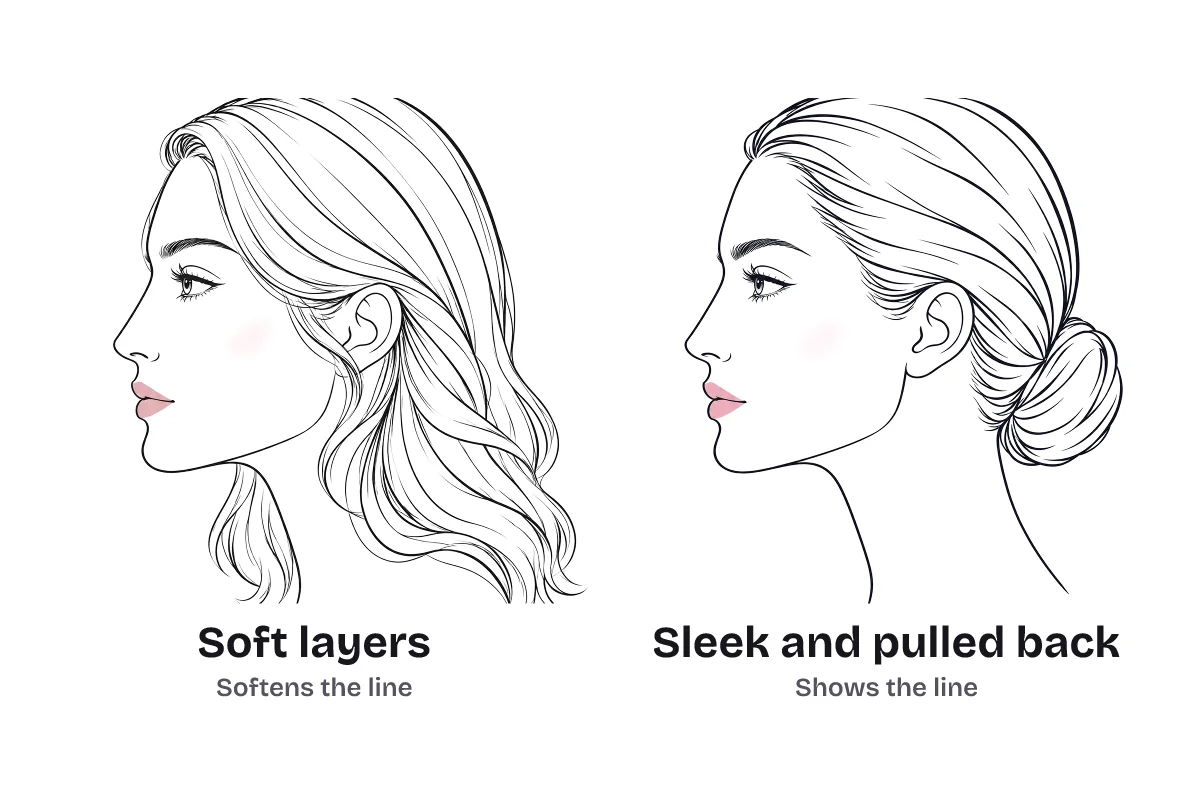
A straight nose makes a strong, clean profile line. If you’d like to soften it, face-framing layers, side parts and softer brows do that; sleek, pulled-back hair and defined brows emphasize it. Both look great.
Nose piercings and a Greek nose
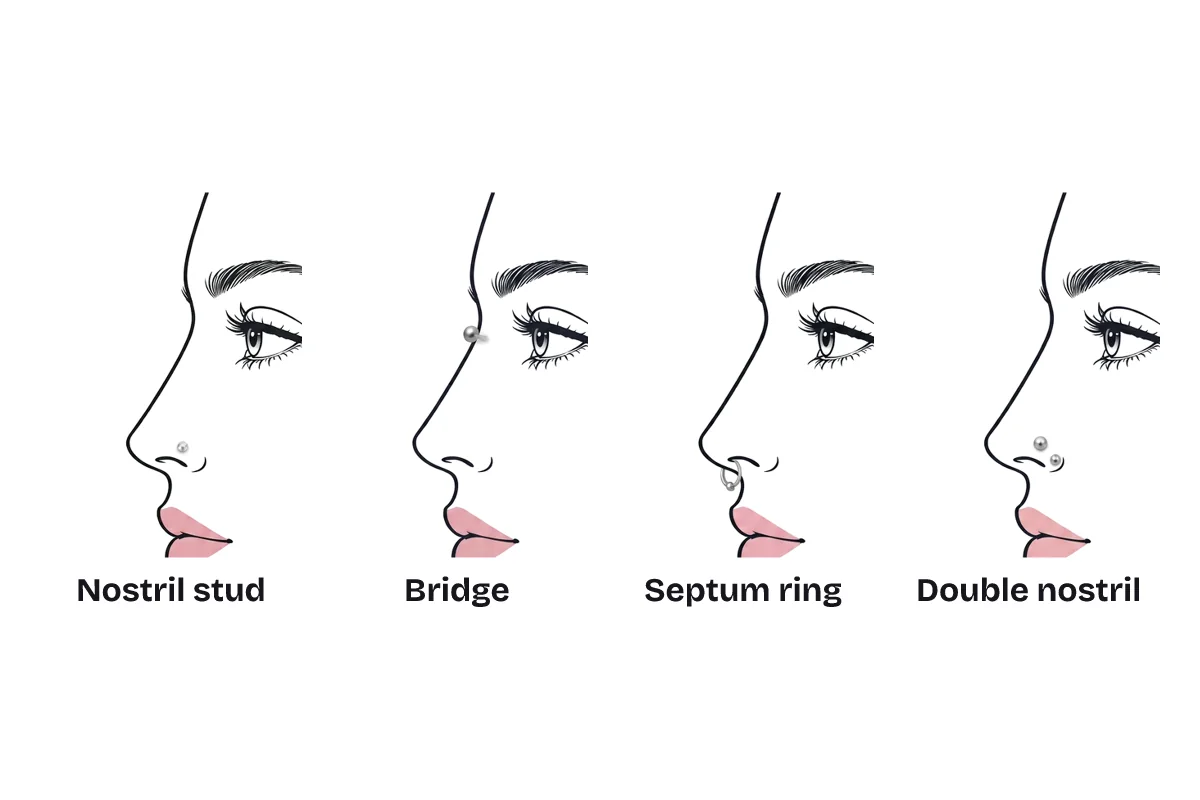
- Nostril studs at the crease suit a straight nose and look clean in profile.
- Bridge piercings can suit a straight, even bridge, since the jewelry sits level across it; ask a piercer to check your bridge height.
- Septum rings add a focal point at the center without affecting the straight line.
- Double nostril piercings follow the curve of the nostril and work well with a defined tip.
Choose a licensed, reputable piercer, who will check your anatomy first.
Glasses and sunglasses on a straight bridge
Sunglasses tend to sit well on a straight, fairly high bridge, so wraparound and oversized shapes are easy to wear. If frames sit too high and touch your brows, look for a slightly lower bridge or adjustable pads so your eyes stay centered in the lenses.
Greek noses in photos
Straight noses photograph consistently, but close-up selfies still widen them. One study found a selfie from about 30 cm (12 inches) makes the nose base look around 30% wider than a photo from 1.5 m (5 feet) (Ward and colleagues). Holding the camera further away gives a more accurate picture of your nose width.
Greek noses in men and women
Straight noses are common in every gender. For men, a straight bridge pairs well with most haircuts and beard styles; for women, it suits both soft and sleek styles. Styling choices come from face shape and hair type more than from the nose.
Myths about Greek noses
- “A Greek nose means Greek ancestry.” The name comes from classical art. Straight noses are found worldwide.
- “The Greek nose is the ideal nose.” Classical artists idealized it, but no nose type is better than another.
- “A straight nose never changes.” Like every nose, the tip can droop slightly with age.
- “Any tiny curve means it isn’t straight.” Most straight noses have very slight variations.
Check your nose profile and width with the nose shape detector.
Frequently asked questions
What is considered a Greek nose?
A nose whose bridge is straight in profile, running in a clean line from between the brows to the tip, with a tip that points forward. It's also called a Grecian or straight nose.
Is having a Greek nose rare?
No. Straight bridges are common. There's no reliable data ranking nose types, and many straight noses have a very slight curve or dip that places them near the Roman or button types.
Is a Greek nose the same as a straight nose?
Yes, in everyday use. Some describe the classical Greek profile as one where the straight bridge continues almost directly from the forehead with little dip between the brows, but most people use Greek and straight interchangeably.
How can I tell if my nose is straight from the side?
Take a profile photo at eye level from about 1.5 m (5 feet) and lay a ruler, or a straight line in a photo app, along the bridge from between the brows to the tip. If the bridge follows the line without bulging above it or dipping below it, it's straight.
Is a Grecian nose considered attractive?
The straight profile was idealized in classical sculpture, which is where the name comes from, but no nose type is more attractive than another. Preferences vary widely between people and cultures.
Ready to check yours? The free nose shape detector takes about a minute, and your photo never leaves your device.
Open the nose shape detectorSources
- Anatomy, Head and Neck, Nose (StatPearls), NCBI Bookshelf, US National Library of Medicine
- Nasal Distortion in Short-Distance Photographs: The Selfie Effect (JAMA Facial Plastic Surgery, 2018), PubMed, US National Library of Medicine