Deep-Set Eyes: How to Tell and Makeup That Brings Them Out
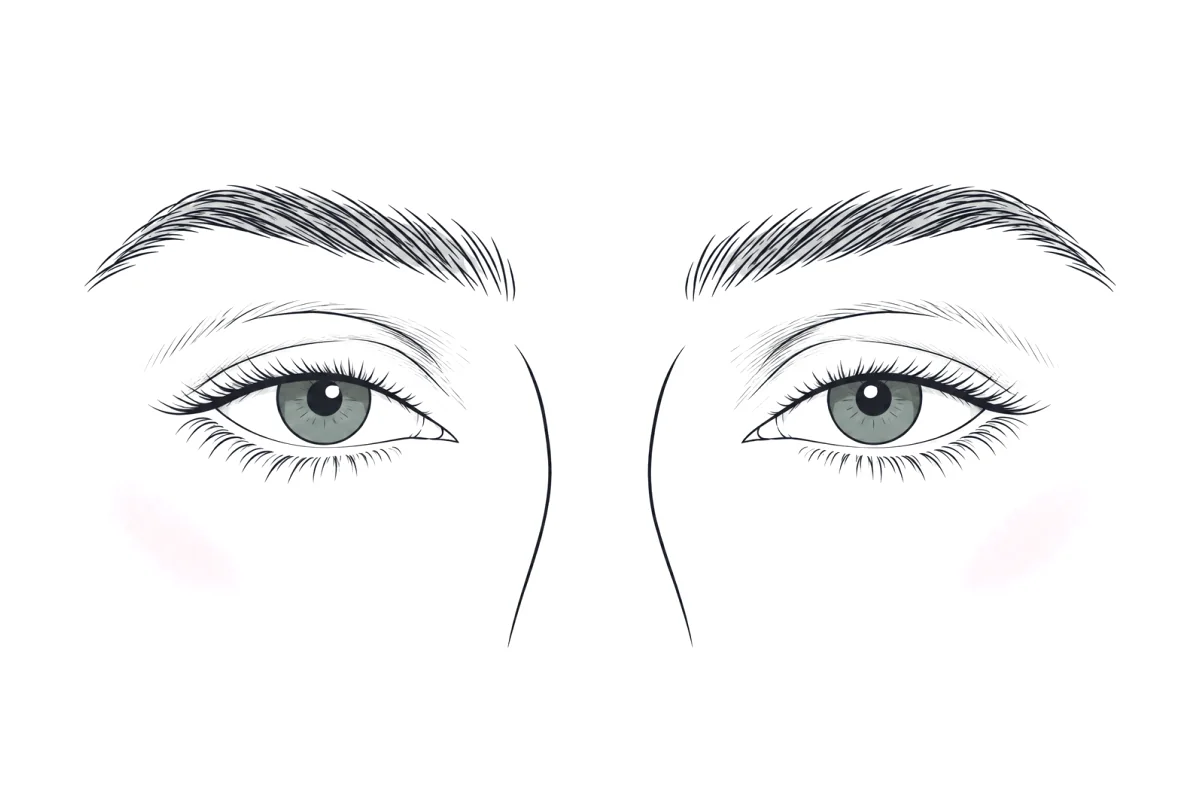
How to tell if you have deep-set eyes
The eye shape detector asks whether your eyes sit back under your brow and combines it with your eye outline and corner angle.
Open the eye shape detectorCheck in a mirror with soft light from the front, then turn to the side.
- Shadow on the lid. From the front, the area between your lashes and brow looks darker or more shadowed than the rest of your face, even without makeup.
- A prominent brow bone. Your brow ridge projects noticeably, and you can feel a clear ledge above your eyes.
- From the side, your brow bone sits clearly in front of your eyes.
- The crease may look deeper, sitting in a hollow rather than on a flat lid.
- In photos taken from above, your eyes may look smaller or partly hidden, because the brow shades them.
Deep-set describes depth, not outline, so they can be almond, round, upturned or downturned, and they’re often hooded too.
What does it mean when you have deep-set eyes?
Your eyes sit a little further back in their sockets relative to your brow bone and cheekbones. It’s a natural variation in facial structure. From the front, the lid and crease look more shadowed, and from the side your brow bone projects more than your eyes.
What makes eyes deep-set?
Eye position depends on the bones of the eye socket and brow, the amount of soft tissue and fat around the eye, and how far the eye itself sits in the socket. When the brow ridge is prominent, or the tissue around the eye is less full, the eye appears set back. It’s part of your facial structure, like cheekbone height or nose shape.
Some people notice their eyes looking more sunken with age, weight loss, dehydration or tiredness, as the fullness around the eye changes. That’s different from a sudden or one-sided change, which is worth checking with a doctor (Cleveland Clinic).
Deep-set vs hooded vs protruding eyes
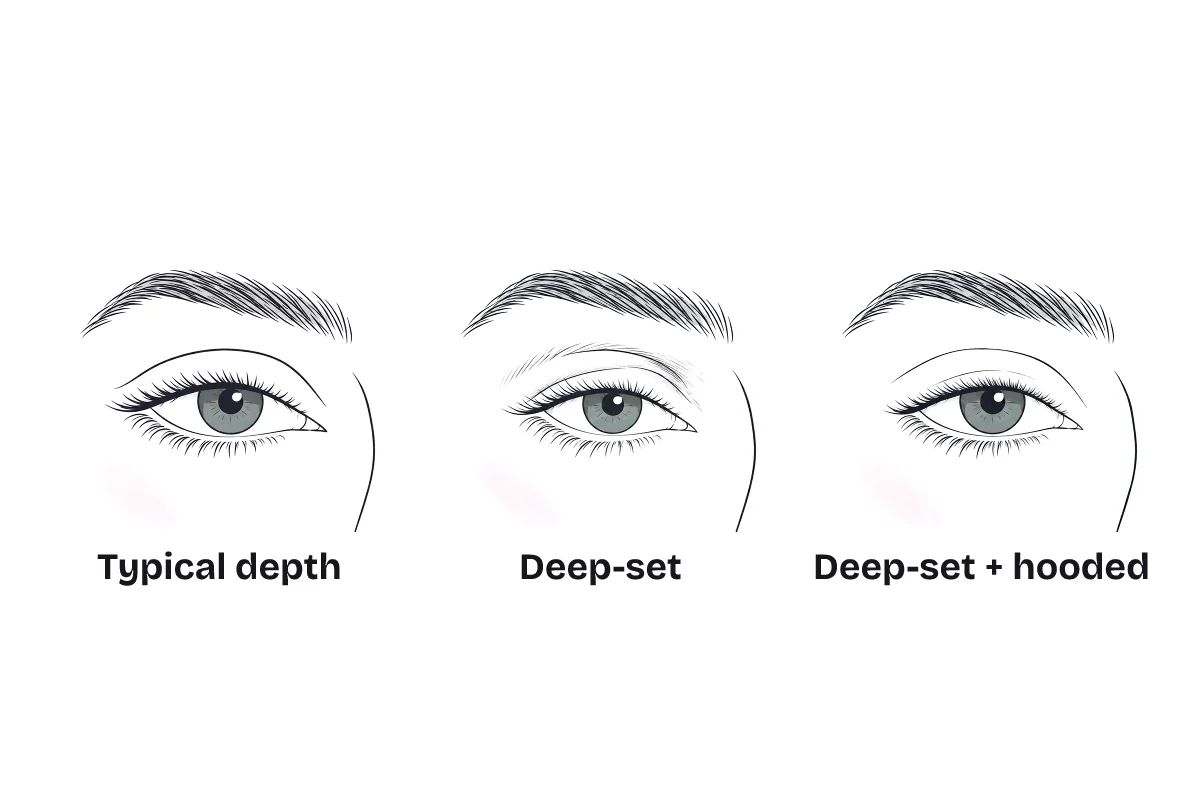
- Deep-set vs hooded: deep-set eyes sit back under the brow; hooded eyes have a fold of skin that covers the crease. The lid on a deep-set eye is often fully visible but shadowed, while a hooded lid is partly covered. Many people have both. See hooded eyes.
- Deep-set vs protruding: protruding eyes sit forward, so the lid is more visible and the eye looks fuller. A deep-set eye is the opposite. (Eyes that start to bulge forward can be a medical sign and should be checked by a doctor.)
- Deep-set vs “tired eyes”: tiredness adds temporary shadows under the eye; deep-set structure affects the upper lid and brow area and stays consistent.
Depth is one of four traits that make up an eye type, all covered in the eye shapes guide.
Makeup for deep-set eyes
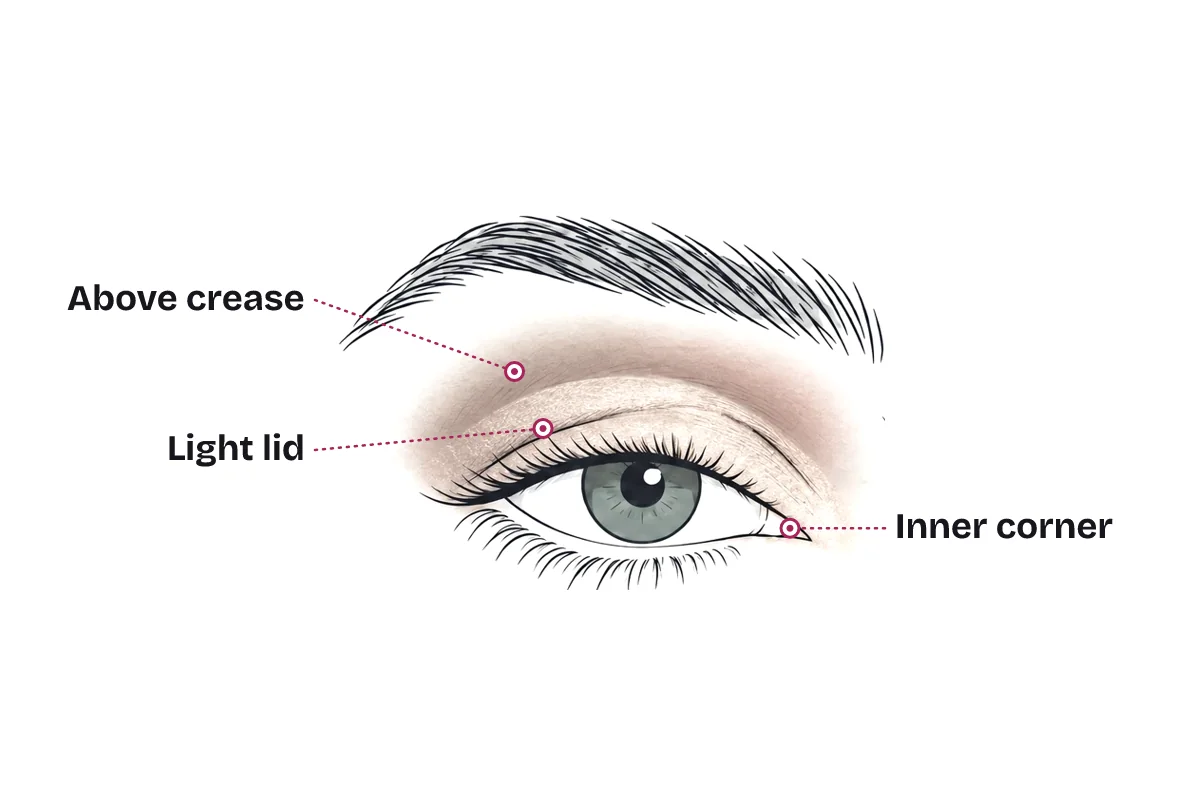
The goal most people want is to bring the lid forward and brighten the shadowed area. Here’s a routine that does that:
- Brighten the lid. Pat a light satin or soft shimmer shade across the whole mobile lid. Light reflects forward, so the lid looks less recessed.
- Place depth above the crease. Blend a mid-tone matte shade slightly above your natural crease, where the brow bone begins. Putting deep color inside the crease itself deepens the hollow.
- Soften the brow bone. Use a matte shade close to your skin tone, or skip highlight entirely. A bright brow-bone highlight makes the brow project further.
- Lighten the inner corner with a pale, luminous shade.
- Keep liner thin. A fine line or tightline defines the eye without shrinking the lid. Smudged brown shadow as liner is softer than a heavy black line.
- Curl and coat your lashes. Lashes extend forward past the brow shadow, which makes the eye look more open.
Shades that work
Warm neutrals (champagne, soft gold, peach) and soft cool neutrals (taupe, rose, lavender gray) both work; choose by your undertone. The color analysis can tell you which family flatters you. Very dark shades are best kept to the outer corner or the upper lash line.
Under-eye concealer
This eye shape often has more shadow in the inner corner. A peach or bisque corrector under concealer can neutralize bluish shadows, and a light layer at the inner corner is usually more effective than heavy coverage under the whole eye.
Eyebrows for deep-set eyes
Because the brow sits close above the eye, very full, low brows can crowd it. Tidy the underside of the brow, fill with light strokes, and keep the arch soft. Brushing brow hairs up with a clear gel gives the lid a little more visible space. Avoid adding heavy color below the natural brow line.
Glasses for deep-set eyes
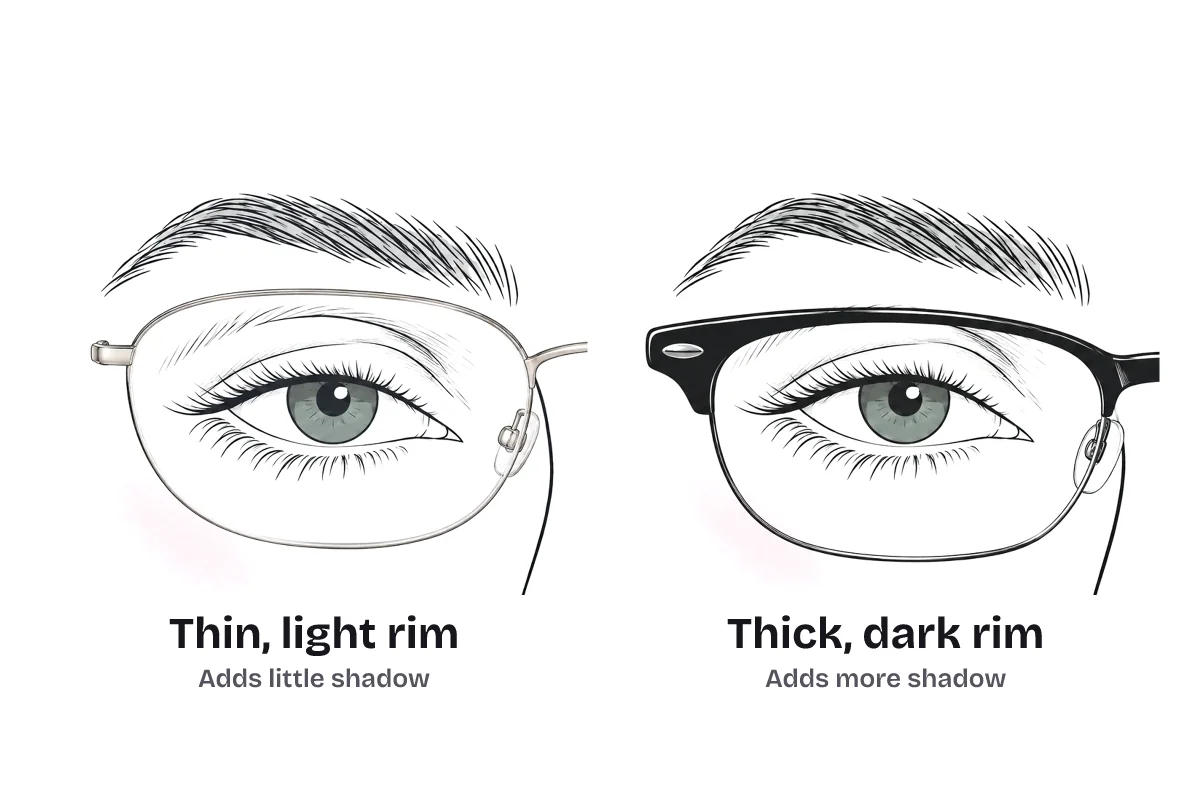
Frames that sit a little higher on the face, with the top rim just below or in line with the brow, keep the eyes visible. Thin or light-colored top rims add less shadow than thick, dark ones. Adjustable nose pads help position lenses at the right height.
Deep-set eyes in photos
Eyes that sit back photograph best with light from the front and slightly above eye level. Overhead lighting (such as ceiling lights or noon sun) casts the brow’s shadow straight down over the eyes. Face a window, tilt your chin a touch down toward the camera rather than up, and hold the camera at or slightly above eye level. A little light-reflecting shadow in the inner corners also catches the light in photos.
Deep-set eyes in men
In men, a deep-set eye area paired with a strong brow are common. Grooming stray brow hairs underneath and choosing frames with thinner top rims keeps the eyes from looking shadowed in photos. For photos, soft light from the front, not overhead, is the easiest improvement.
Myths about deep-set eyes
- “Deep-set eyes look tired.” Shadow is not tiredness. With front-facing light, they look as bright as any other.
- “You should avoid dark eyeshadow.” You can wear it; just place it at the outer corner or above the crease rather than all over the lid.
- “Deep-set eyes are a health problem.” Eyes that have always been deep-set are a normal facial structure. Only new or one-sided changes need checking.
- “Deep-set eyes can’t be hooded.” They often are.
Check your full eye shape, including outline and tilt, with the eye shape detector.
Frequently asked questions
Do deep set eyes age better?
Everyone's eyes change with age as skin loses firmness and soft tissue shifts. Deep-set eyes may show some changes less because the brow shades the area, while hollowing can become more noticeable. There's no single better or worse way to age.
How do I make deep-set eyes look bigger with makeup?
Use a light, bright shade (satin or soft shimmer) across the lid, place a mid-tone slightly above your natural crease rather than in it, keep liner thin, and curl your lashes well. Lightening the inner corner also opens the eye.
Can deep-set eyes also be hooded?
Yes, and it's common. A prominent brow and soft tissue beneath it can fold down over the crease. Follow the deep-set tips for color placement and the hooded tip of applying makeup with your eyes open.
Are deep set eyes more attractive?
No eye shape is more attractive than another; it's personal and cultural. The deep-set shape is simply a natural variation, and they suit defined, sculpted makeup looks particularly well.
Can you get deep set eyes naturally, or do they change?
Most deep-set eyes are simply how a person's face is built. The area around the eyes can also look more hollow with age, weight loss or tiredness. A sudden or one-sided change is worth a doctor's visit.
Ready to check yours? The free eye shape detector takes about a minute, and your photo never leaves your device.
Open the eye shape detectorSources
- Enophthalmos (Sunken Eyes), Cleveland Clinic
- Anatomy, Head and Neck: Eyelid (StatPearls), NCBI Bookshelf, US National Library of Medicine