Free Color Analysis: Find Your Season (Photo + Quiz)
Color analysis in two steps: a short quiz plus an optional photo check places you in one of 12 seasons, with a palette to match.
Private by design. Your photo is analyzed on your device and never uploaded, saved or shared.How this works
Choose a clear, front-facing photo
Your photo stays on this device. Nothing is uploaded.
For the most accurate result
- Stand facing a window in daylight, out of direct sun
- Bare skin: no foundation, bronzer or filters
- Show your natural hair color if you can (roots are fine)
- Optional: hold a sheet of white paper next to your face
Color analysis finds the colors that work best with your natural coloring: your skin, eyes and hair. Seasonal color analysis sorts people into four families (spring, summer, autumn and winter), each split into three for 12 seasons in total, based on whether your coloring is warm or cool, light or deep, and bright or soft. Your season comes with a palette of colors to wear near your face. If you’ve been wondering “what season am I?”, this free color analysis online answers it from a short quiz and an optional photo, without your photo ever leaving your device.
What season am I? Take the color analysis
Choose an option in the tool above:
- Photo plus quiz. We read your skin, eye and hair color from a photo on your own device, you confirm your natural hair color, then answer 10 quick questions. The photo and quiz are always combined.
- Quiz only. Ten questions, no photo.
You’ll get your season, your strongest color trait, the next closest season, a 24-color palette with hex codes, colors to keep away from your face, and makeup, hair and jewelry tips. There’s no email and no sign-up.
What is seasonal color analysis?
Every color can be described by three properties, and seasonal analysis matches each of them to you:
- Hue, or temperature: warm colors have a yellow base; cool colors have a blue base. People with golden or peachy undertones tend to glow in warm colors; people with pink or rosy undertones in cool ones.
- Value, or depth: how light or dark a color is. Light coloring suits lighter colors; deep coloring suits richer, darker ones.
- Chroma, or clarity: how bright and saturated a color is. High-contrast, vivid coloring suits bright colors; soft, blended coloring suits muted ones.
Each of the 12 seasons is defined by the trait that stands out most. Light Spring and Light Summer are defined by lightness, Deep Autumn and Deep Winter by depth, Bright Spring and Bright Winter by clarity, Soft Summer and Soft Autumn by softness, and the four “true” seasons by temperature.
The 12 seasons explained
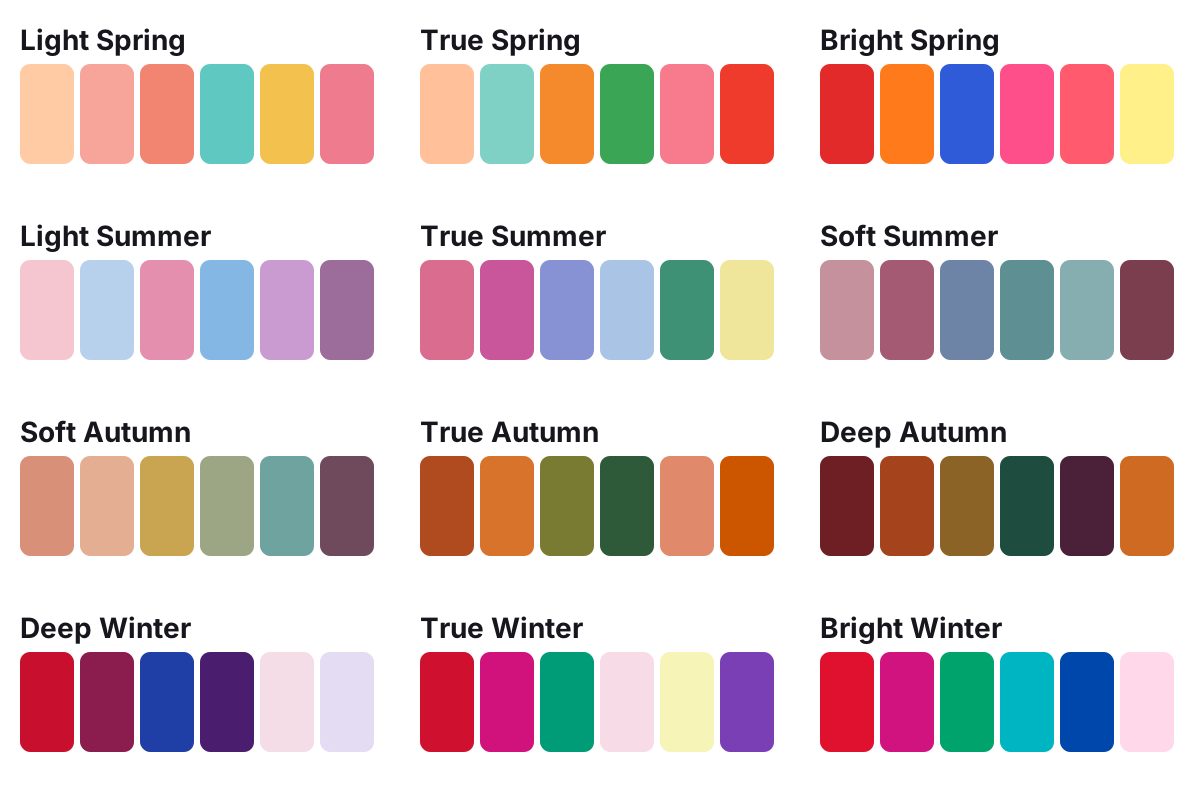
Spring: warm and clear
Light Spring is light and warm (peach, butter yellow, light aqua). True Spring is fully warm and fresh (coral, golden yellow, kelly green). Bright Spring is vivid with a warm lean (hot coral, turquoise, true red).
Summer: cool and soft
Light Summer is light and cool (powder pink, lavender, powder blue). True Summer is fully cool and gentle (rose, raspberry, denim). Soft Summer is muted with a cool lean (dusty rose, sage, gray-blue).
Autumn: warm and rich
Soft Autumn is muted with a warm lean (soft terracotta, khaki, muted teal). True Autumn is fully warm and earthy (rust, mustard, olive). Deep Autumn is deep and warm (brick, forest green, chocolate).
Winter: cool and striking
Deep Winter is deep and cool (burgundy, emerald, navy with pure white). True Winter is fully cool with high contrast (fuchsia, royal blue, icy pastels). Bright Winter is vivid with a cool lean (electric blue, hot pink, emerald).
How the photo analysis works
We sample your skin from both cheeks, your eye color from the colored ring of each iris (skipping the pupil and reflections), and your hair from just above your forehead. For each area we drop the brightest and darkest pixels, which removes shine, shadow and stray hairs, and take the typical color of what’s left.
The colors are converted into CIELAB, the international standard color space designed to match how people perceive color (ISO/CIE 11664-4). That lets us measure hue, lightness and chroma the same way a color scientist would. Your skin’s hue angle suggests warm or cool, your hair and skin lightness suggest light or deep, and the contrast between your hair and skin plus the vividness of your eyes suggest bright or soft.
Lighting is the weak point of any photo color analysis. Warm lamps make everyone look more golden, shade makes everyone look cooler, and phone cameras adjust white balance automatically. That’s why:
- the tool warns you when your photo looks strongly yellow- or blue-tinted,
- you can hold a sheet of plain white paper next to your face and tap it, so we can correct the colors for your light,
- and the photo is always blended with the quiz (the quiz gets more weight when the light looks off).
Where each of the 12 seasons sits on the temperature, depth and clarity scales is listed in the numbers behind each result.
How to do a color analysis yourself
You don’t need a consultant to test the basics. In daylight, facing a window, with no makeup and your hair pulled back:
- Warm vs cool. Hold something gold and something silver under your face, or a coral and a fuchsia fabric. Which makes your skin look even and clear rather than sallow or ruddy?
- Light vs deep. Compare a pastel with a deep jewel or earth tone. Which one looks balanced, and which one overpowers you or washes you out?
- Bright vs soft. Compare a pure, saturated color with a dusty, grayed version of the same hue. Which one lets your eyes stand out?
Your answers point to one of the four families and then to one of its three seasons.
Is seasonal color analysis accurate?
Seasonal color analysis is a practical framework rather than a scientific classification. The underlying ideas are sound: hue, lightness, saturation and contrast are real properties, and some colors do make skin look more even than others. But the boundaries between seasons are soft, and two careful analysts can place the same person in neighboring seasons.
Use your result as a map, not a rulebook. Your palette gives you a head start in shops, but if a color outside it makes you happy and looks good to you, wear it.
Using your palette
- Clothes: wear palette colors nearest your face (tops, scarves, collars). Colors to avoid work fine further away, in trousers, shoes and bags.
- Makeup: your season’s tips suggest blush, lipstick and eyeshadow families that match your undertone and contrast.
- Hair color: staying within your season’s warmth and depth usually looks most natural.
- Jewelry: warm seasons lean gold, cool seasons lean silver, and many people wear both.
Not sure about your undertone? Take the undertone test for foundation matching.
Your palette covers color; shape decides the rest. Pair it with frames and haircuts for your face shape, liner placement for your eye shape, and lip colors placed to suit your lip shape.
Frequently asked questions
How do I figure out my season?
Work out three things: whether your coloring leans warm or cool, light or deep, and bright or soft. The tool above does this by reading your skin, eye and hair color from a photo and combining it with a 10-question quiz. Your season is the one whose traits match yours best.
Can I do a color analysis myself?
Yes. In daylight with no makeup, hold different colored fabrics under your face and compare warm against cool shades, then bright against muted ones. Notice which make your skin look even and your eyes brighter. The quiz above walks you through the same comparisons.
Is seasonal color analysis accurate?
Seasonal color analysis is a useful styling framework, not a science. It's grounded in real color properties (hue, lightness and saturation) and in visible contrast, but where you sit between two neighboring seasons is often a judgment call. Treat your result as a strong starting point and trust what you see in the mirror.
Is there a free color analysis quiz?
Yes. This one is free, with no email, no sign-up and no paid report. The photo is optional and never leaves your device.
Can ChatGPT do my color analysis?
A chatbot can give a general opinion from a photo, but it can't account for your camera's white balance or lighting, and your photo is sent to its servers. This tool reads specific color values on your device, lets you correct the lighting with white paper and blends in a quiz to reduce camera errors.
How much does a professional color analysis cost?
In-person analysis with a trained consultant commonly costs somewhere around one hundred to a few hundred US dollars, depending on the city and what's included (fabric drapes, a physical swatch book, makeup advice). A free online analysis is a good way to see whether it's worth paying for a session.
What is the rarest color season?
There's no reliable data on how common each season is. Seasons are defined by traits that blend continuously, so every season covers a wide range of people.
Can I do color analysis without a photo?
Yes. Choose Quiz only above. The photo adds real color measurements, but the quiz alone places you in one of the 12 seasons.
Sources
- ISO/CIE 11664-4:2019 Colorimetry, Part 4: CIE 1976 L*a*b* colour space, International Organization for Standardization and CIE