Monolid Eyes: What They Are and Makeup That Shows Up
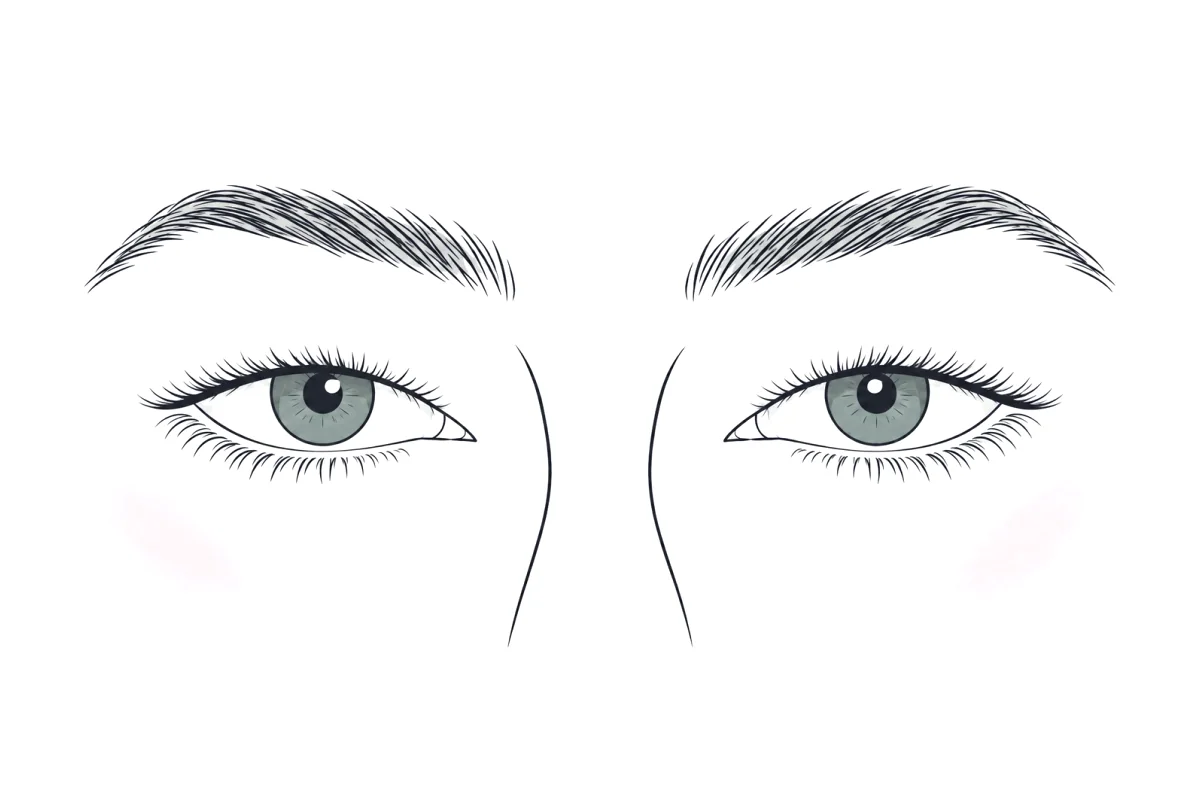
How to tell if you have monolid eyes
The eye shape detector asks about your crease and measures your eye outline, so you can see if you have monolids and what shape they are.
Open the eye shape detectorLook straight into a mirror with a relaxed face, then close your eyes and look again.
- No crease, eyes open. There’s no fold line between your lashes and your brow.
- No crease, eyes closed. Even with your eyes closed, the lid is one smooth surface. (If a crease appears when you close them, you’re more likely hooded.)
- Lashes meet the lid directly. You don’t see a band of lid that looks different from the skin above it.
- The whole lid shows when your eyes are open, because there’s no fold to cover it.
- Your lashes may point straighter or slightly downward, which is common with this lid and easy to change with a lash curler.
Monolid describes the lid. The outline of the eye can still be almond, round, upturned or downturned.
What creates a crease, and why monolids don’t have one
The upper eyelid crease forms where fibers from the muscle that lifts the lid attach to the skin of the lid (StatPearls). When those attachments sit very low or don’t reach the skin, and the lid has a smooth, even layer of soft tissue, no fold forms: that’s a monolid. It’s a normal variation in anatomy, not a difference in how well the eye works, and it’s found in people of many backgrounds.
Monolid vs hooded vs double eyelid
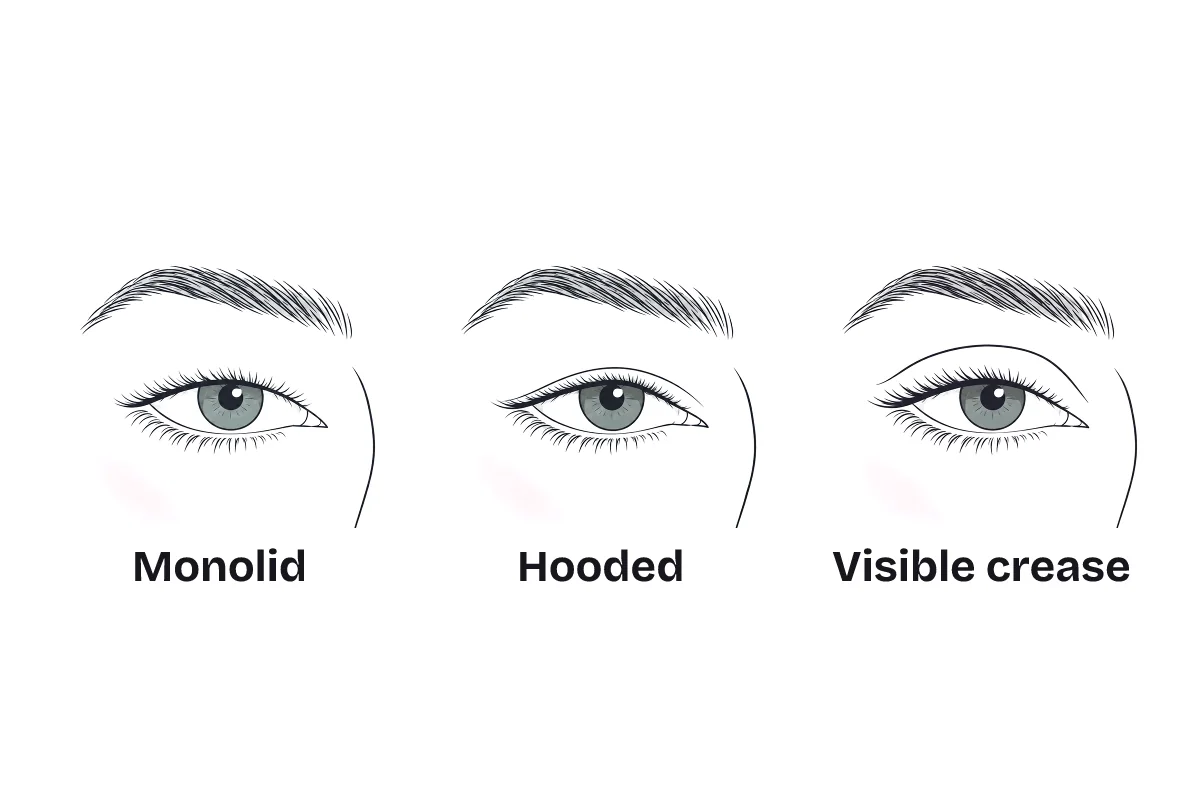
| Feature | Monolid | Hooded | Double eyelid (visible crease) |
|---|---|---|---|
| Crease | None | Present, covered by a fold | Present and visible |
| With eyes closed | Smooth lid | Crease appears | Crease visible |
| Lid visible when open | All of it | Little or none | A clear band |
| Where shadow shows | Everywhere you place it | Above the fold | Lid and crease |
A low or partial crease, sometimes called an inner or “in-fold” crease, sits between a monolid and a double eyelid. If a thin crease appears only toward the outer corner, the makeup in this guide will still work well for you.
Lid type is the first of four traits covered in the complete guide to eye shapes.
Monolid makeup
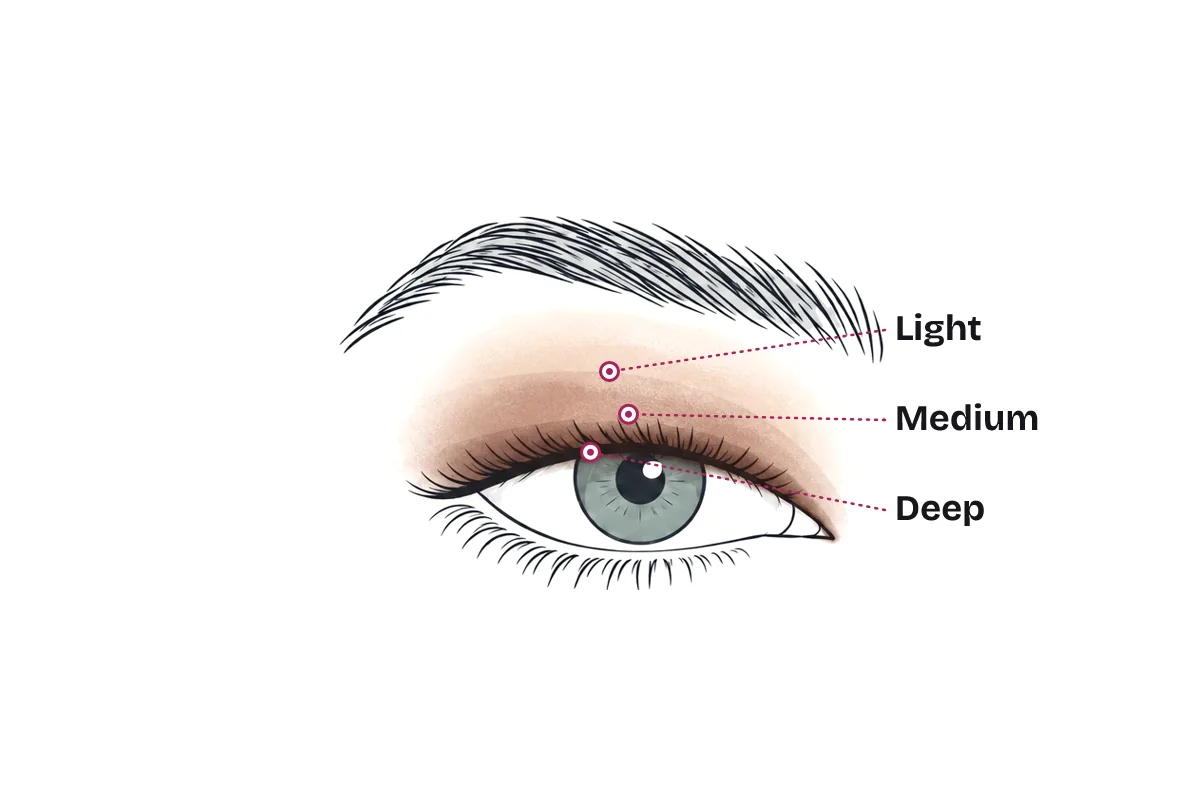
Monolids are brilliant for makeup: with no crease to work around, the whole lid is a canvas. The trick is choosing placements and formulas that still show when your eyes are open and that don’t crease on a smooth lid.
Gradient shadow
- Prime the lid so shadow doesn’t fade or move.
- Apply the deepest shade at the lash line, a few millimeters high.
- Blend a medium shade above it and a light shade above that, fading upward in soft horizontal bands.
- Check with your eyes open. You should see a smooth fade from dark at the lashes to light at the top.
The gradient creates depth without needing a crease, and it’s the technique most makeup artists start with on a smooth lid.
Pops of color and shimmer
A single bright or shimmer shade across the center of the lid shows up beautifully on a crease-free lid, because nothing hides it. Try a metallic from your color season (the color analysis and undertone test help you pick).
Formulas
Cream and cream-to-powder shadows set with a matching powder last longest on smooth lids. Waterproof pencils and gel liners transfer less.
For a balanced face, the lip shape detector suggests liner and lipstick placement for your lips too.
Eyeliner for monolids
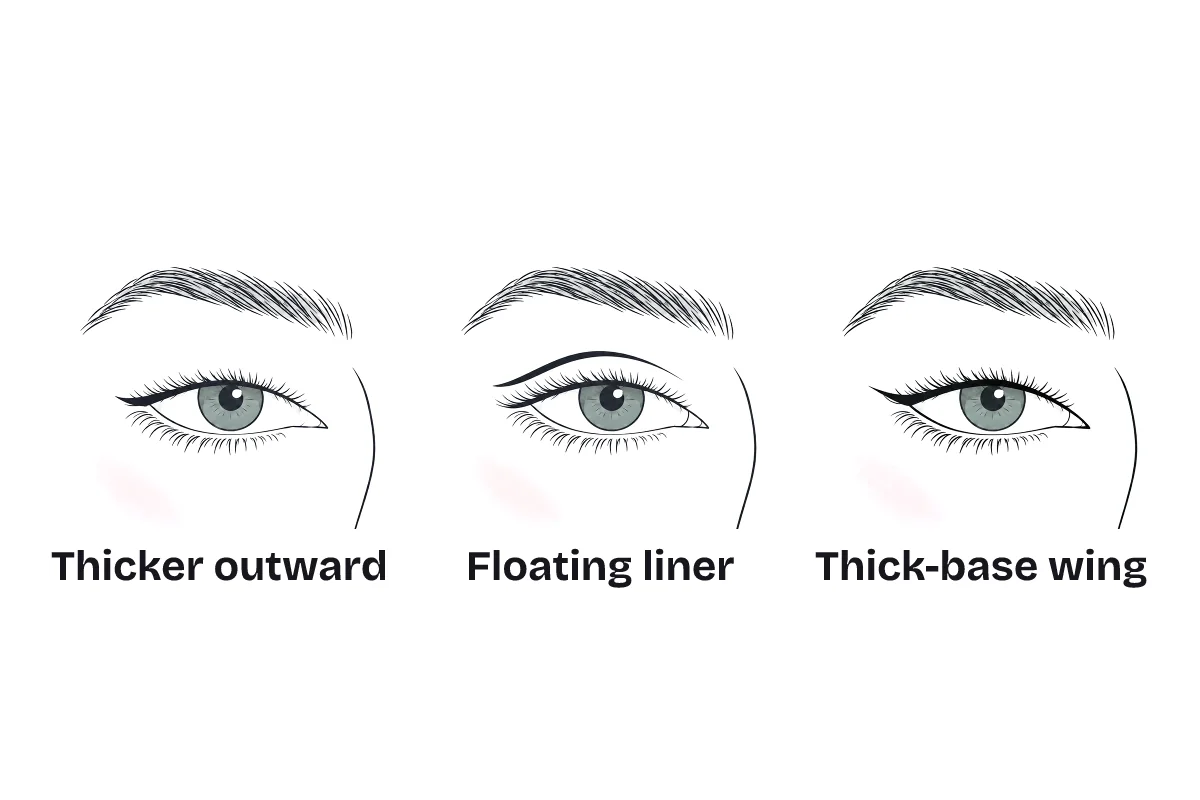
- Thicker toward the outer corner. Start thin at the inner corner and build thickness as you move out, so the line stays visible when your eyes are open.
- Draw with your eyes open, looking straight ahead, and mark where the line should end.
- Tightline the upper waterline to make the lashes look fuller at the root.
- Try a floating or graphic liner. A line drawn a little above the lash line, visible across the open lid, is a striking look that a smooth lid suits especially well.
- Wings: keep them a little thicker than usual at the base so they don’t disappear.
Long, lifted wings on a smooth lid are also the base of the fox eye look.
Lashes on monolids
Straight lashes are common with crease-free lids. A heated lash curler, or a regular curler used in two or three small pumps from root to tip, gives a lasting lift. Follow with a lightweight, waterproof mascara; heavy formulas can pull the curl down. Individual lash clusters, placed at the outer third, add lift without a heavy band.
Eyebrows for monolid eyes
A straighter brow with a soft, gentle arch complements the smooth lid. Keep the brow shape clean underneath so there’s a clear space between brow and lid. Very high, sharp arches can look disconnected from a smooth lid, but it’s a style choice.
Monolid vs hooded: which makeup rules apply?
If you’re unsure whether you have a monolid or a hood, close your eyes. A crease showing only when your eyes are closed means you’re hooded: follow the hooded eyes advice of placing shadow above the fold. No crease at all means monolid: use gradient shadow from the lash line upward.
Myths about monolids
- “Monolids need correcting.” They’re a normal, healthy eyelid shape. Tape and surgery are personal choices, never necessities.
- “You can’t wear eyeshadow on monolids.” You can wear every kind. A smooth lid shows gradient, graphic and shimmer looks especially well.
- “Monolids and hooded eyes are the same.” Hooded eyes have a crease that’s covered; monolids don’t have one.
- “Monolids only occur in some groups of people.” Monolids are found in people of many different backgrounds.
Find out your full eye shape, including your outline and corner angle, with the eye shape detector.
Frequently asked questions
Are hooded eyes and monolids the same?
No. A hooded eye has a crease that's covered by a fold of skin when the eye is open; you can see the crease when you close your eyes or lift the brow. A monolid has no crease at all, open or closed.
What's the difference between a monolid and a double eyelid?
A double eyelid has a visible crease that divides the upper lid into two parts: the lid below the crease and the skin above it. A monolid has one smooth surface with no dividing crease. Some people have a very low or partial crease, which sits in between.
How do I do eyeliner on monolids?
Look straight into the mirror and draw liner that's thin at the inner corner and thicker toward the outer corner, so it stays visible when your eyes are open. Tightlining the upper waterline adds definition that the lid won't hide. Waterproof formulas stop transfer.
Can a monolid become a double eyelid?
Some people use eyelid tape or glue to create a temporary crease, and double eyelid surgery (a type of blepharoplasty) creates a permanent one. These are personal choices, not corrections: a monolid is a normal, healthy eyelid shape. Anyone considering surgery should see a qualified oculoplastic or facial plastic surgeon.
Is a monolid considered attractive?
Attractiveness is personal and cultural, and monolids are common among people widely considered beautiful, including many models and actors. This lid is especially suited to gradient and graphic makeup looks.
Do monolids change with age?
The lid can become fuller or heavier over time as skin loses elasticity, and some people develop a partial crease or a slight hood. It's a normal change.
Ready to check yours? The free eye shape detector takes about a minute, and your photo never leaves your device.
Open the eye shape detectorSources
- Anatomy, Head and Neck: Eyelid (StatPearls), NCBI Bookshelf, US National Library of Medicine